
Jeder europäische Investor träumt davon, einen Markt in Übersee zu finden, auf dem hohe Renditen und Lebensstil zusammenkommen. Die Algarve glänzt als Portugals Touristenhochburg Nummer eins, unterstützt von einer hohen Nachfrage nach Kurzzeitmieten und steigenden Immobilienwerten. Mit durchschnittliche Mietrenditen von 4-6% und nachweislichen Einnahmen aus der Ferienvermietung bietet die Region sowohl Stabilität als auch Wachstumschancen. Entdecken Sie, wie ein professionelles Management den Besitz einer Immobilie aus der Ferne vereinfachen, Stress reduzieren und Ihnen dabei helfen kann, die lukrativsten Kauf-zu-Vermietungschancen an der Algarve zu nutzen.
Inhaltsübersicht
- Buy-to-Let an der Algarve erklärt
- Verfügbare Arten von Mietobjekten
- Marktnachfrage und Mieteinnahmepotenzial
- Rechtliche Anforderungen für ausländische Investoren
- Steuerliche Auswirkungen und Kostenfaktoren
- Risiken, Fallstricke und intelligente Strategien
Wichtigste Erkenntnisse
| Punkt | Einzelheiten |
|---|---|
| Starke Mietrenditen | Die Algarve bietet durchschnittliche Mietrenditen von 4-6%, besonders attraktiv für Ferienvermietungen. Investoren sollten Spitzenlagen wie Lagos anvisieren, um die Rendite zu maximieren. |
| Eigenschaftstypen | Investoren können zwischen verschiedenen Immobilientypen wählen, darunter Wohnungen, Villen, Stadthäuser und Einfamilienhäuser, die sich jeweils an unterschiedliche Mieterdemografien richten. |
| Rechtliche Erwägungen | Ausländische Investoren haben einen unkomplizierten Erwerbsprozess, müssen sich aber mit den örtlichen Vorschriften, möglichen Steuern und Verpflichtungen für kurzfristige Vermietungen vertraut machen. |
| Risikomanagement | Umfassende Marktforschung und Strategien zur Risikominderung, einschließlich der Aufrechterhaltung finanzieller Puffer, sind für erfolgreiche Investitionen auf dem Immobilienmarkt der Algarve unerlässlich. |
Buy-to-Let an der Algarve erklärt
Investitionen in Mietimmobilien an der Algarve stellen eine strategische Chance für europäische Investoren dar, die auf der Suche nach soliden Mieteinnahmen und einer Wertsteigerung ihrer Immobilien sind. Der robuste Tourismussektor der Region schafft ein überzeugendes Umfeld für Immobilieninvestitionen, mit starke Nachfrage nach Ferienunterkünften die ein beständiges Vermietungspotenzial schaffen.
Der Immobilienmarkt der Algarve bietet attraktive Investitionsmerkmale, darunter durchschnittliche Mietrenditen zwischen 4-6% jährlich. Vor allem die kurzfristige Ferienvermietung bietet ein beträchtliches Ertragspotenzial, da sie vom Status der Region als Portugals wichtigstem Touristenziel profitiert. Investoren können mit soliden Renditen rechnen, wenn sie sich auf Immobilien in strategischen Lagen wie Lagos konzentrieren, die internationale Reisende anziehen, die ein Küstenerlebnis suchen.
Um sich in der Buy-to-Let-Landschaft zurechtzufinden, muss man die lokalen Vorschriften und die Marktdynamik kennen. Zu den Herausforderungen gehören saisonale Schwankungen im Tourismus, potenzielle Einschränkungen bei der Vergabe von Mietlizenzen und die Notwendigkeit einer umfassenden Immobilienverwaltung. Erfolgreiche Investoren konzentrieren sich in der Regel auf Immobilien, die ein ausgewogenes Verhältnis zwischen Ästhetik, Nähe zu Annehmlichkeiten und hohem Mietpotenzial aufweisen. Aspekte wie der Zustand der Immobilie, die örtliche Infrastruktur und die Erreichbarkeit von Stränden und Touristenattraktionen sind entscheidende Faktoren für die Maximierung der Investitionsrendite.
Profi-Tipp: Informieren Sie sich gründlich über die örtlichen Mietvorschriften und ziehen Sie die Zusammenarbeit mit einer professionellen Immobilienverwaltung in Betracht, um Ihre Investitionsstrategie zu optimieren und den Verwaltungsaufwand zu minimieren.
Verfügbare Arten von Mietobjekten
Investoren, die sich an der Algarve nach Möglichkeiten zum Kauf und zur Vermietung umsehen, werden ein vielfältiges Angebot an für Mietinvestitionen geeignete Immobilientypen. Die Region bietet mehrere Immobilienoptionen, jede mit einzigartigen Eigenschaften und potenziellen Mietrenditen. In erster Linie können Investoren zwischen Häusern, Wohnungen, Villen und unbebauten Grundstücken wählen, die jeweils unterschiedliche Vorteile für Vermietungsstrategien bieten.
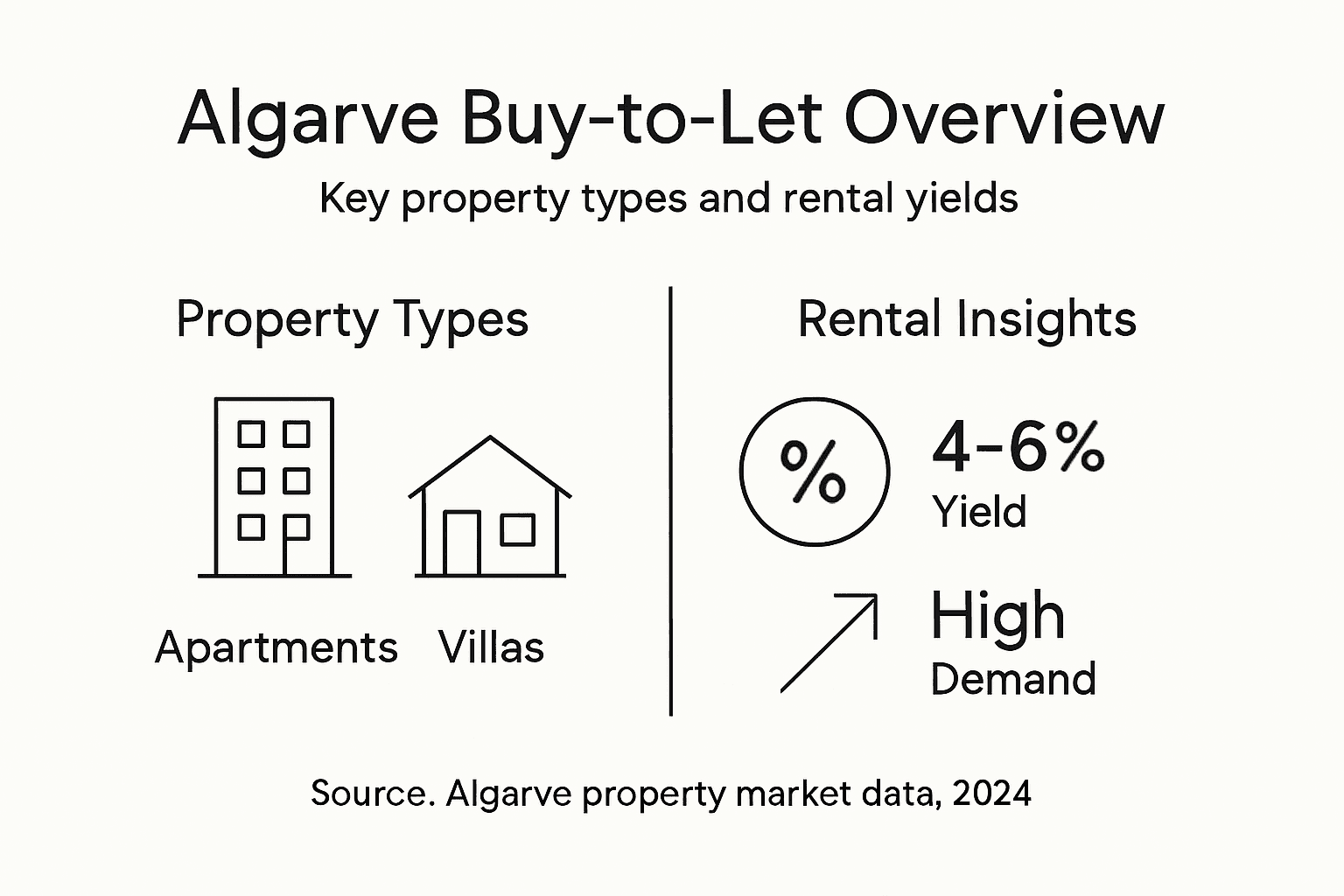
Wohnungen sind für viele Investoren der einfachste Einstieg, insbesondere in städtischen Gebieten wie Lagos und Faro. Diese Immobilien reichen in der Regel von kompakten Studioeinheiten bis hin zu geräumigen Mehrzimmerwohnungen und ziehen sowohl Kurzzeitmieter als auch Langzeitmieter an. Wohnungen in erstklassigen Lagen in der Nähe von Stränden, Restaurants und Touristenattraktionen erzielen oft Spitzenmieten und weisen eine konstante Auslastung auf.
Villen bieten eine luxuriösere Investitionsmöglichkeit, die Reisende der gehobenen Klasse und Familien anspricht, die eine erstklassige Unterkunft suchen. Diese freistehenden Immobilien verfügen häufig über private Pools, weitläufige Außenbereiche und hochwertige Annehmlichkeiten, die höhere Mietpreise rechtfertigen. Villen an der Küste in Gegenden wie Albufeira und Lagos können saisonal ein beträchtliches Einkommen generieren, insbesondere in den Hochsommermonaten, wenn internationale Touristen exklusive Urlaubserlebnisse suchen.
Stadthäuser und freistehende Häuser bieten alternative Investitionsmöglichkeiten und ziehen oft ständige Bewohner oder längerfristige Mieter an. Diese Immobilien bieten in der Regel mehr Platz, Privatsphäre und ein authentischeres portugiesisches Lebensgefühl. Investoren sollten bei der Auswahl von Mietobjekten Faktoren wie die lokale Infrastruktur, die Nähe zu Annehmlichkeiten und den möglichen Renovierungsbedarf sorgfältig berücksichtigen.
Im Folgenden finden Sie eine Zusammenfassung der wichtigsten Arten von Mietobjekten an der Algarve und deren Investitionsprofile:
| Eigenschaft Typ | Ziel-Mieter | Voraussichtliche Mietrendite | Bemerkenswerte Merkmale |
|---|---|---|---|
| Wohnung | Feriengäste, Einheimische | Mäßig bis hoch | Zentrale Lage, einfache Wartung |
| Villa | Anspruchsvolle Touristen, Familien | Hoch (saisonal) | Privater Pool, luxuriöse Annehmlichkeiten |
| Stadthaus | Langfristig Aufenthaltsberechtigte | Mäßig | Geräumige, authentische Erfahrung |
| Freistehendes Haus | Langfristig Aufenthaltsberechtigte | Mäßig | Mehr Privatsphäre, Potenzial für Renovierung |
Profi-Tipp: Führen Sie eine gründliche Marktforschung über die Miettrends in bestimmten Stadtvierteln durch und konsultieren Sie lokale Immobilienexperten, um die vielversprechendsten Immobilienarten für Ihr Anlageportfolio zu ermitteln.
Marktnachfrage und Mieteinnahmepotenzial
Der Immobilienmarkt der Algarve bietet ein attraktives Investitionsumfeld, mit solide Mieteinnahmeaussichten für strategische Investoren. Die Küstenregionen weisen ein besonders attraktives Potenzial auf, da die durchschnittlichen Immobilienpreise und Mietrenditen ein vielversprechendes wirtschaftliches Umfeld für Strategien zum Kauf und zur Vermietung schaffen. Ab 2026 bietet der Markt differenzierte Möglichkeiten, die eine sorgfältige Auswahl und Verwaltung von Immobilien belohnen.
Die Mietrenditen an der Algarve liegen in der Regel bei durchschnittlich 5,6%, wobei es je nach Immobilientyp, Lage und saisonaler Nachfrage erhebliche Unterschiede gibt. In Küstenstädten wie Lagos und Albufeira werden vor allem in den touristischen Spitzenmonaten Spitzenmieten erzielt. Kurzfristige Ferienvermietungen schneiden durchweg besser ab als langfristige Mietverträge und bieten Investoren das Potenzial für höhere Renditen durch strategische Preisgestaltung und Marketingansätze. Immobilien in der Nähe von Stränden, historischen Vierteln und wichtigen Touristenattraktionen erzielen in der Regel die beständigsten Mieteinnahmen.

Investoren müssen die Marktdynamik sorgfältig analysieren, die über die reinen Mietrenditen hinausgeht. Dazu gehören saisonale Belegungsraten, Instandhaltungskosten für die Immobilie und lokale Vorschriften für Kurzzeitvermietungen. Die erfolgreichsten Buy-to-Let-Strategien beinhalten flexible Preismodelle, professionelles Immobilienmanagement und gezieltes Marketing für internationale Touristen, die einzigartige Küstenerlebnisse suchen. Das Verständnis der Mikromarkttrends in den verschiedenen Gemeinden der Algarve ist entscheidend für die Maximierung der Investitionserträge.
Profi-Tipp: Entwickeln Sie ein umfassendes Finanzmodell, das saisonale Schwankungen berücksichtigt, potenzielle Leerstandszeiten einrechnet und einen Puffer für unerwartete Instandhaltungskosten einplant, um nachhaltige Mieteinnahmen zu gewährleisten.
Rechtliche Anforderungen für ausländische Investoren
Ausländische Investoren können an der Algarve unkomplizierte Verfahren für den Immobilienerwerb nutzen, mit klare rechtliche Rahmenbedingungen für internationale Käufer. Das portugiesische Rechtssystem bietet eine bemerkenswerte Zugänglichkeit, indem es gebietsfremden Investoren die gleichen Eigentumsrechte wie portugiesischen Staatsbürgern zugesteht. Dieser integrative Ansatz beseitigt viele traditionelle Hindernisse, auf die internationale Investoren auf den Immobilienmärkten normalerweise stoßen.
Die Abschlusskosten sind ein entscheidender finanzieller Faktor, der in der Regel zwischen 6% und 10% des Kaufpreises einer Immobilie ausmacht. Diese Kosten umfassen Grunderwerbssteuern, Registrierungsgebühren und rechtliche Dokumentationsanforderungen. Nicht ansässige Investoren sollten sich auf zusätzliche Schwierigkeiten bei der Beantragung von Hypotheken einstellen, da sich die Beleihungsquoten zwischen ansässigen und nicht ansässigen Antragstellern erheblich unterscheiden. Die Website Alojamento Lokal Das Registrierungsverfahren für Kurzzeitmietobjekte ist zunehmend reguliert und erfordert eine genaue Einhaltung der lokalen kommunalen Richtlinien.
Um sich in der rechtlichen Landschaft zurechtzufinden, ist ein umfassendes Verständnis mehrerer wichtiger rechtlicher Aspekte erforderlich. Ausländische Investoren müssen sich sorgfältig mit den steuerlichen Verpflichtungen, möglichen Auswirkungen auf den Wohnsitz und den jüngsten Änderungen der Investitionsvisaprogramme auseinandersetzen. Auch wenn das Goldene Visum-Programm Änderungen erfahren hat, bleibt Portugal ein attraktives Ziel für internationale Immobilieninvestoren. Die Einschaltung lokaler Rechtsexperten, die auf ausländische Immobilientransaktionen spezialisiert sind, kann dazu beitragen, potenzielle regulatorische Herausforderungen zu entschärfen und reibungslose Investitionsprozesse zu gewährleisten.
Profi-Tipp: Wenden Sie sich an einen portugiesischen Rechtsexperten, der sich mit internationalen Immobilientransaktionen auskennt, um eine umfassende Strategie zur Einhaltung der Vorschriften zu entwickeln, bevor Sie Ihre Immobilieninvestition abschließen.
Steuerliche Auswirkungen und Kostenfaktoren
Investoren, die an der Algarve eine Immobilie erwerben möchten, müssen sich in einer komplexen Finanzlandschaft zurechtfinden, die mit einem umfassenden Verständnis der mit dem Kauf verbundenen Kosten beginnt. Die Gesamtkosten für den Erwerb einer Immobilie liegen in der Regel zwischen 6% und 10% des Kaufpreises, einschließlich Grunderwerbssteuer, Notargebühren und Registrierungskosten. Diese Vorabkosten stellen eine erhebliche Anfangsinvestition dar, die eine strategische Finanzplanung erfordert.
Die Besteuerung von Immobilien in Portugal folgt einem strukturierten Ansatz mit einer jährlichen Grundsteuer (Städtische Gebühren für Imóveis (Imposto Municipal sobre Imóveis) oder IMI) zwischen 0,3% und 0,45%. Mieteinnahmen sind voll steuerpflichtig, aber das portugiesische Steuersystem bietet nuancierte Anreize für Vermieter, insbesondere für diejenigen, die an regulierten Mietprogrammen teilnehmen. Eigentümer von Immobilien, die nicht in Portugal ansässig sind, müssen sich mit spezifischen Einkommenssteueranforderungen für Mietgewinne auseinandersetzen, wobei es Möglichkeiten gibt, Ausgaben durch strategisches Finanzmanagement auszugleichen. Hypothekenzinsen und damit zusammenhängende Ausgaben können teilweise absetzbar sein, was internationalen Investoren zusätzliche finanzielle Flexibilität bietet.
Vergleichen Sie diese allgemeinen Kostenfaktoren und Steuern für Investoren, die sich an der Algarve einmieten wollen:
| Kostenart | Typischer Satz oder Bereich | Gilt für | Finanzielle Auswirkungen |
|---|---|---|---|
| Abschlusskosten | 6% - 10% des Preises | Alle Käufer | Erhebliche Vorabinvestitionen |
| Jährliche IMI-Steuer | 0,3% - 0,45% an Wert | Grundstückseigentümer | Laufender jährlicher Aufwand |
| Steuer auf Mieteinnahmen | Auf der Grundlage des Gewinns | Gebietsfremde und Gebietsansässige | Reduziert den Nettoertrag |
| Abzug von Hypothekenzinsen | Teilweise | Käufer mit Darlehen | Verrechnung mit dem steuerpflichtigen Einkommen |
Die Steuerlandschaft für ausländische Investoren umfasst mehrere Ebenen von Überlegungen, die über den reinen Immobilienbesitz hinausgehen. Investoren müssen ihren steuerlichen Wohnsitzstatus, potenzielle Doppelbesteuerungsabkommen und die Auswirkungen der Meldung von Mieteinnahmen sorgfältig prüfen. Eine professionelle Steuerberatung ist entscheidend für das Verständnis des komplizierten Gleichgewichts zwischen lokalen Steuervorschriften, möglichen Steuerbefreiungen und strategischer Finanzplanung. Die Komplexität des Steuersystems unterstreicht die Bedeutung einer umfassenden professionellen Beratung, um die Investitionserträge zu maximieren und die vollständige Einhaltung der Vorschriften sicherzustellen.
Profi-Tipp: Beauftragen Sie einen spezialisierten portugiesischen Steuerberater mit internationaler Investitionserfahrung, um eine umfassende Steuerstrategie zu entwickeln, die Ihre Finanzlage optimiert und die vollständige Einhaltung der lokalen Vorschriften gewährleistet.
Risiken, Fallstricke und intelligente Strategien
Investoren müssen Immobilien an der Algarve mit strategischem Bewusstsein angehen und sorgfältig navigieren potenzielle Investitionsrisiken und Marktkomplexität. Die Region bietet attraktive Möglichkeiten, aber der Erfolg erfordert eine strenge Sorgfaltspflicht und ein proaktives Risikomanagement. Die Volatilität der Märkte, bürokratische Prozesse und sich entwickelnde regulatorische Rahmenbedingungen können unvorbereitete Investoren vor große Herausforderungen stellen.
Zu den Hauptrisiken gehören die schwankende touristische Nachfrage, die immer komplexer werdenden Genehmigungsanforderungen für Kurzzeitmieten und mögliche rechtliche Unklarheiten bei Immobilientransaktionen. Erfahrene Investoren entschärfen diese Herausforderungen durch umfassende Strategien: Sie führen ausführliche Marktforschungen durch, ziehen lokale Rechtsexperten hinzu und entwickeln flexible Notfallpläne. Das Verständnis der nuancierten Unterschiede zwischen den verschiedenen Gemeinden an der Algarve ist von entscheidender Bedeutung, da sich das Mietpotenzial und die rechtlichen Rahmenbedingungen zwischen den Küstenstädten und den Regionen im Landesinneren drastisch unterscheiden können.
Die Diversifizierung erweist sich als grundlegender Ansatz für das Risikomanagement von Buy-to-Let-Investoren. Dies bedeutet nicht nur die Auswahl von Immobilien an verschiedenen Standorten, sondern auch die Entwicklung vielseitiger Vermietungsstrategien, die sich an saisonale Schwankungen und veränderte Marktbedingungen anpassen lassen. Erfolgreiche Investoren halten in der Regel finanzielle Puffer vor, um unerwartete Ausgaben zu bewältigen, die Immobilien nach hohen Standards instand zu halten und wachsam zu bleiben, was lokale regulatorische Änderungen betrifft, die sich auf den Vermietungsbetrieb auswirken könnten. Professionelle Immobilienverwaltungsdienste können bei der Bewältigung dieser komplexen Dynamik entscheidende Unterstützung leisten, indem sie lokales Fachwissen und operative Effizienz bieten.
Profi-Tipp: Entwickeln Sie eine umfassende Risikomanagementstrategie, zu der die Aufrechterhaltung eines finanziellen Puffers von 20%, die Durchführung vierteljährlicher Markteinschätzungen und der Aufbau von Beziehungen zu lokalen Immobilienfachleuten gehören, die zeitnahe Erkenntnisse liefern können.
Maximieren Sie Ihre Buy-to-Let-Investition an der Algarve mit fachkundiger Unterstützung
Um sich auf dem komplexen Markt für Mietobjekte an der Algarve zurechtzufinden, bedarf es mehr als nur eines Einblicks, sondern auch eines zuverlässigen Partners, der die rechtlichen Anforderungen, das saisonale Mietmanagement und die Marktschwankungen effektiv handhabt. Die Herausforderung, hohe Mietrenditen zu erzielen und gleichzeitig die lokalen Vorschriften einzuhalten, kann sich überwältigend anfühlen. Wir von Riva Prime haben uns darauf spezialisiert, internationalen Investoren wie Ihnen dabei zu helfen, diese Hürden zu überwinden. Dazu bieten wir Ihnen eine umfassende Immobilienrecherche, rechtliche und finanzielle Unterstützung sowie ein fachkundiges Vermietungsmanagement, das auf den Markt in Lagos und an der Algarve zugeschnitten ist. Unsere Dienstleistungen sind darauf ausgerichtet, Ihre Investition zu schützen und das Einkommenspotenzial zu maximieren, indem wir bewährte Strategien anwenden, die auf die in diesem Artikel hervorgehobenen Schlüsselherausforderungen ausgerichtet sind, wie z. B. die Handhabung von Mietlizenzen und saisonalen Schwankungen.
Beginnen Sie Ihre profitable Reise an die Algarve noch heute, indem Sie mit Fachleuten zusammenarbeiten, die die einzigartige Dynamik dieses lukrativen Marktes verstehen. Besuchen Sie Startseite von Riva Prime um detaillierte Immobilienangebote, Investitionsfallstudien und personalisierte Unterstützungsoptionen zu erkunden. Entdecken Sie, wie unsere End-to-End-Lösungen Ihre Buy-to-Let-Ambitionen in eine sichere, problemlose und lohnende Realität verwandeln können. Warten Sie nicht, um die Mietmöglichkeiten an der Algarve in dauerhaften finanziellen Erfolg zu verwandeln. Erfahren Sie mehr auf unserer Seite für Immobilieninvestitionen und machen Sie den ersten Schritt zu einem florierenden Mietportfolio.
Häufig gestellte Fragen
Wie hoch sind die durchschnittlichen Mietrenditen für Mietobjekte an der Algarve?
Die durchschnittlichen Mietrenditen für Mietobjekte an der Algarve liegen in der Regel zwischen 4-6% pro Jahr, wobei kurzfristige Ferienvermietungen oft noch höhere Renditen erzielen.
Welche Arten von Mietobjekten gibt es für Investoren an der Algarve?
Investoren können aus einer Vielzahl von Immobilientypen wählen, darunter Wohnungen, Villen, Stadthäuser und Einfamilienhäuser, die jeweils ein einzigartiges Potenzial und eine besondere Mieterdemografie bieten.
Welche rechtlichen Anforderungen müssen ausländische Investoren bei Investitionen an der Algarve beachten?
Ausländische Investoren sollten sich über die Rechte zum Erwerb von Immobilien, die Abschlusskosten (6%-10% des Kaufpreises) und das Registrierungsverfahren für Kurzzeitvermietungen informieren, das die Einhaltung der örtlichen Vorschriften erfordert.
Welche potenziellen Risiken sind mit Immobilieninvestitionen an der Algarve verbunden?
Zu den Hauptrisiken gehören die schwankende touristische Nachfrage, die komplexen Anforderungen an die Mietlizenzen und die Änderungen der Marktvorschriften. Investoren sollten eine gründliche Due-Diligence-Prüfung durchführen und flexible Strategien entwickeln, um diese Risiken abzumildern.