
Het bezit van een vakantiehuis in de Algarve is voor veel Europese investeerders zeer aantrekkelijk, maar de veranderende regels rond kortetermijnverhuur kunnen zelfs doorgewinterde kopers overvallen. Door de sterke toename van vakantieverhuur is het nu ingewikkelder dan ooit om aan de gemeentelijke voorschriften te voldoen, aangezien nieuwe wetten lokale overheden meer zeggenschap geven over verhuuractiviteiten. Als u deze veranderende vereisten begrijpt, kunt u ervoor zorgen dat uw woning winstgevend blijft en uw investeringsstrategie soepel verloopt, van Lissabon tot Lagos.
Inhoudsopgave
- Definitie van kortetermijnverhuur in Portugal
- Soorten kortetermijnverhuur en diensten
- Licenties en belangrijke wettelijke vereisten
- Kosten, belastingen en verdienpotentieel
- Risico’s, valkuilen en nalevingskwesties
Belangrijkste opmerkingen
| Punt | Details |
|---|---|
| Overzicht van kortetermijnverhuur | Alojamento Local (AL) is een gereguleerde strategie voor vastgoedbeleggingen in Portugal, waarbij eigenaren van onroerend goed verplicht zijn zich te registreren en een vergunning aan te vragen. |
| Soorten verhuur | De belangrijkste soorten kortetermijnverhuur zijn vrijstaande woningen, appartementen, co-housingcomplexen en privékamers, die elk hun eigen beheersbehoeften en prijspotentieel hebben. |
| Licentievereisten | Beleggers moeten een gemeentelijk registratienummer aanvragen, veiligheidsinspecties doorstaan en de juiste documentatie bijhouden om te waarborgen dat aan de wettelijke normen wordt voldaan. |
| Financiële overwegingen | Investeringen in kortetermijnverhuur kunnen een rendement van 4% tot 8% opleveren, dat sterk wordt beïnvloed door de locatie en het seizoen, waardoor een grondige financiële planning en kennis van de belastingwetgeving noodzakelijk zijn. |
Definitie van kortetermijnverhuur in Portugal
Kortetermijnverhuur (ook wel bekend als Lokale accommodatie (of AL in het Portugees) is een gespecialiseerde vastgoedbeleggingsstrategie waarbij eigenaren woonruimtes voor korte periodes verhuren, meestal aan toeristen en tijdelijke bezoekers. Recente Portugese wetgeving heeft de manier waarop deze huurwoningen in de verschillende regio’s van Portugal worden beheerd ingrijpend veranderd.
De belangrijkste kenmerken van kortetermijnverhuur in Portugal zijn onder meer:
- De huurperiodes variëren doorgaans van enkele dagen tot enkele weken
- Tot het vastgoed kunnen appartementen, huizen, villa’s en zelfs kamers in woongebouwen behoren
- Verplichte registratie bij de lokale gemeentelijke autoriteiten
- Specifieke vergunningsvereisten voor naleving van de operationele voorschriften
Binnen het nieuwste regelgevingskader beschikken gemeenten nu over meer autonomie bij het beheer van kortetermijnverhuur. Dankzij deze gedecentraliseerde aanpak kunnen lokale overheden regelgeving op maat opstellen die een evenwicht creëert tussen de ontwikkeling van het toerisme en de beschikbaarheid van woningen.
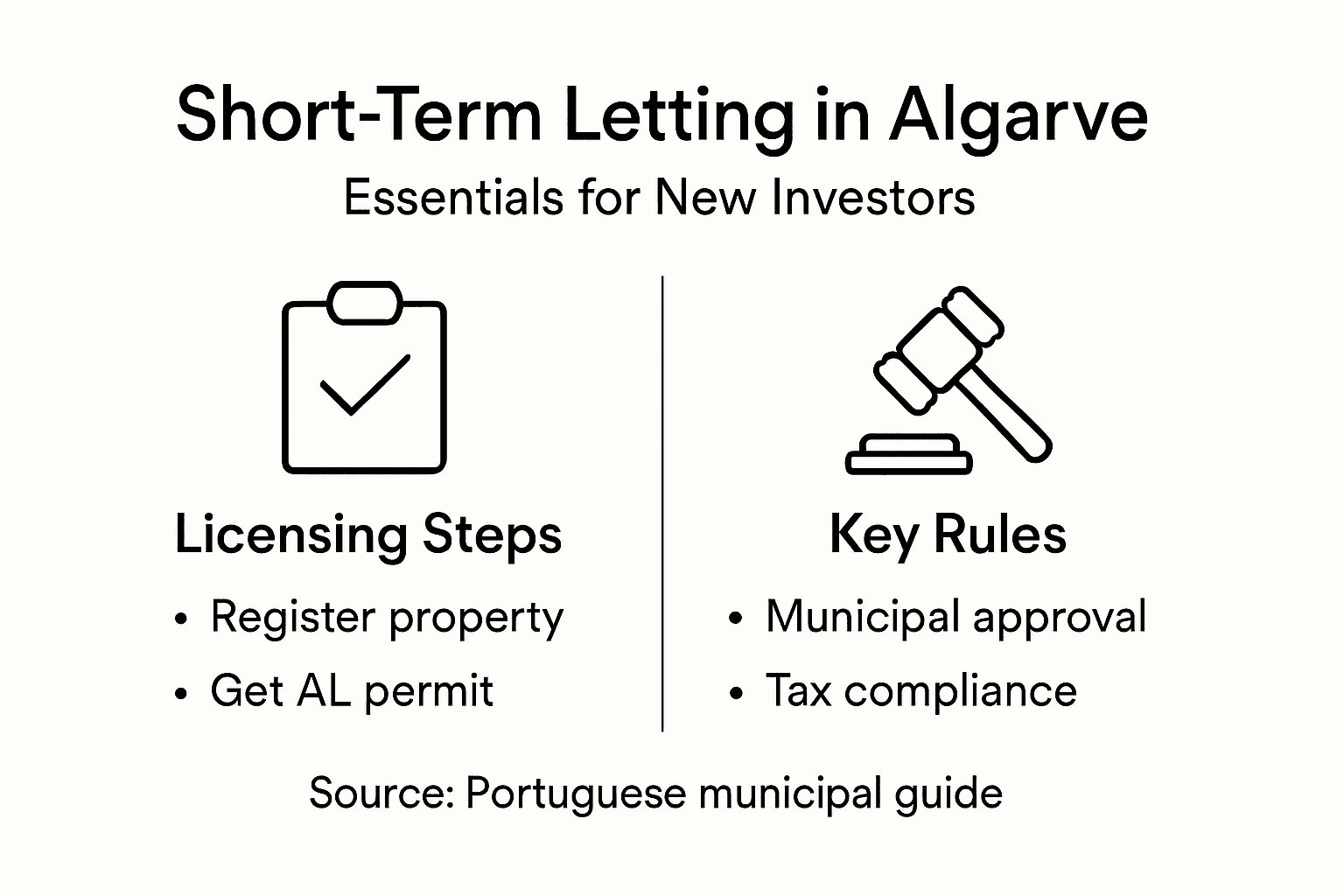
Beleggers die geïnteresseerd zijn in kortetermijnverhuur moeten hun weg vinden in ingewikkelde bureaucratische procedures. Registratie van onroerend goed wordt van cruciaal belang, wat gedetailleerde documentatie en naleving van lokale richtlijnen vereist. Potentiële investeerders moeten rekening houden met mogelijke zonespecifieke beperkingen die de verhuurmogelijkheden in bepaalde gebieden zouden kunnen beperken.
Pro tip: Voordat u een woning koopt om deze voor korte termijn te verhuren, dient u grondig onderzoek te doen naar de gemeentelijke voorschriften om inzicht te krijgen in de specifieke lokale regelgeving en eventuele beperkingen.
Soorten kortetermijnverhuur en diensten
De Algarve biedt een grote verscheidenheid aan categorieën voor kortetermijnverhuur die zijn afgestemd op verschillende beleggingsstrategieën en de voorkeuren van de gasten. Portugese huurregels er worden vier hoofdcategorieën van Alojamento Local (AL)-accommodaties onderscheiden, elk met hun eigen kenmerken en investeringspotentieel.
De belangrijkste vormen van kortetermijnverhuur zijn onder meer:
- Vrijstaande woningen (Moradia): Hele huizen die doorgaans in woonwijken of toeristische gebieden liggen
- Appartementen (Apartamento): Afzonderlijke woningen in gebouwen met meerdere woningen
- Co-housing-accommodaties (Estabelecimentos de Hospedagem): Hostels en gedeelde accommodaties
- Privé-kamers (Quartos): Afzonderlijke kamers binnen de hoofdwoning van de eigenaar
Voor elke verhuurcategorie zijn specifieke vergunningen vereist en moet aan de gemeentelijke voorschriften worden voldaan. Investeerders moeten de juiste Alojamento Local (AL)-certificering, waarbij moet worden voldaan aan veiligheidsnormen, gezondheidsvoorschriften en lokale bestemmingsplannen. Het certificeringsproces garandeert dat accommodaties voldoen aan professionele normen op het gebied van gastvrijheid en adequate verblijfsmogelijkheden bieden aan gasten.

Tot de aanvullende diensten die doorgaans bij kortetermijnverhuur horen, behoren uitgebreide oplossingen voor vastgoedbeheer, zoals professionele schoonmaak, communicatie met gasten, sleuteloverdracht, onderhoud en aansprakelijkheidsverzekering. Deze diensten kunnen de operationele complexiteit voor vastgoedeigenaren aanzienlijk verminderen en tegelijkertijd zorgen voor een hoogwaardige gastbeleving.
Hier volgt een overzicht van de verschillende soorten kortetermijnverhuur en de gevolgen daarvan voor je investering:
| Type verhuur | Gastenprofiel | Beroep op investering | Typische managementbehoeften |
|---|---|---|---|
| Vrijstaande woningen | Gezinnen, groepen | Groot potentieel voor hogere tarieven | Er is uitgebreid onderhoud nodig |
| Appartementen | Koppels, individuele reizigers | Gestaag aanhoudende vraag in stedelijke gebieden | Regelmatige schoonmaak en wisseling van gasten |
| Co-housing-projecten | Budgetreizigers, jonge toeristen | Lagere instapkosten, variabel inkomen | Regelmatige communicatie met gasten |
| Privékamers | Individuele bezoekers, studenten | Flexibele bezetting, lagere inkomsten | Betrokkenheid van de eigenaar bij dagelijkse taken |
Pro tip: Neem contact op met de lokale gemeentelijke autoriteiten om inzicht te krijgen in de specifieke vergunningsvereisten voor het type huurwoning dat u op het oog hebt, voordat u een investering doet.
Licenties en belangrijke wettelijke vereisten
Navigeren door de juridisch landschap Bij kortetermijnverhuur in Portugal moet zorgvuldig rekening worden gehouden met talrijke wettelijke voorschriften. Investeerders moeten een uitgebreid vergunningsproces doorlopen dat uit verschillende cruciale stappen bestaat om volledige naleving van de wetgeving te waarborgen.
De belangrijkste vergunningsvereisten voor Alojamento Local (AL)-accommodaties zijn onder meer:
- Het verkrijgen van een gemeentelijke Lokale accommodatie registratienummer
- Het indienen van gedetailleerde documentatie over het onroerend goed
- Het doorstaan van gemeentelijke veiligheids- en bewoonbaarheidsinspecties
- Het bijhouden van actuele belasting- en verzekeringsgegevens
- Het tonen van officiële AL-licentiebewijzen in de huurwoning
Bij het registratieproces zijn verschillende overheidsinstanties betrokken, waaronder lokale gemeenten, belastingdiensten en toeristenbureaus. Investeerders moeten uitgebreide documentatie overleggen waaruit blijkt dat het onroerend goed aan de vereisten voldoet, waaronder plattegronden, veiligheidscertificaten en bewijs van voldoende onderhoudsnormen.
Financiële verplichtingen zijn eveneens van cruciaal belang. Eigenaren van onroerend goed moeten een nauwkeurige boekhouding bijhouden, de verschuldigde toeristenbelasting betalen en zorgen voor een transparante aangifte van inkomsten bij de lokale belastingdienst. Het niet naleven van deze voorschriften kan leiden tot aanzienlijke sancties, waaronder mogelijke boetes en intrekking van de verhuurvergunning.
Pro tip: Schakel een lokale jurist in die gespecialiseerd is in onroerend goed in Portugal, zodat u wegwijs wordt in de complexe vergunningsvereisten en ervoor zorgt dat u volledig aan de regelgeving voldoet.
Kosten, belastingen en verdienpotentieel
Investeren in kortetermijnverhuur in de Algarve is een complex financieel geheel met genuanceerde inkomstenmogelijkheden en belangrijke fiscale overwegingen. Huurinkomsten kan sterk variëren, afhankelijk van de ligging van het onroerend goed, het seizoen en de beheerstrategie, waardoor een grondige financiële planning voor potentiële beleggers van essentieel belang is.
Belangrijke financiële aspecten van investeringen in kortetermijnverhuur zijn onder meer:
- Aanvankelijke aankoopkosten van onroerend goed
- Kosten voor renovatie en inrichting
- Gemeentelijke en regionale belastingverplichtingen
- Jaarlijkse licentie- en nalevingskosten
- Kosten voor vastgoedbeheer
- Mogelijke waardestijging
Het winstpotentieel op de markt van de Algarve varieert doorgaans van 4% tot 8% jaarlijks rendement, waarbij toplocaties in Lagos, Albufeira en Portimão hogere inkomstenmogelijkheden bieden. Seizoensschommelingen hebben een aanzienlijke invloed op de inkomsten, waarbij de huurprijzen in de zomermaanden aanzienlijk hoger liggen dan in de wintermaanden.
Ontdek hoe de locatie en het seizoen van invloed zijn op de verdienmogelijkheden in de Algarve:
| Locatie | Zomeropbrengst (schatting) | Winteropbrengst (schatting) | Overwegingen voor beleggers |
|---|---|---|---|
| Lagos | Jaarverslag 8% | Jaarverslag 3% | Hoogste huurprijzen in de zomer |
| Albufeira | Jaarverslag 7% | 2,51 TP3T jaarlijks rendement | Grote vraag vanuit de toeristische sector |
| Portimão | 6,51 TP3T jaarlijks rendement | Jaarverslag 2% | Waarschijnlijk langere leegstand in de winter |
| Binnenlandse steden | Jaarverslag 4% | Jaarverslag 1% | Minder vraag, stabiele kosten |
Belastingverplichtingen vormen een cruciaal onderdeel van investeringen in kortetermijnverhuur. Vastgoedeigenaren moeten hun weg vinden in complexe Portugese belastingstelsels, waaronder inkomstenbelasting over huuropbrengsten, gemeentelijke onroerendgoedbelasting en eventuele btw-verplichtingen. Nauwkeurige financiële verslaglegging en professioneel belastingadvies kunnen beleggers helpen hun fiscale strategieën te optimaliseren en onverwachte belastingverplichtingen tot een minimum te beperken.
Pro tip: Raadpleeg een Portugese belastingdeskundige om een uitgebreide financiële strategie uit te werken waarin rekening wordt gehouden met alle mogelijke huurinkomsten, belastingverplichtingen en investeringskosten.
Risico’s, valkuilen en nalevingskwesties
Investeren in kortetermijnverhuur in de Algarve houdt in dat men zich een weg moet banen door een complex regelgevingskader met aanzienlijke potentiële risico’s. Recente wijzigingen in de regelgeving hebben strengere nalevingsvereisten ingevoerd die ingrijpende gevolgen kunnen hebben voor beleggingsstrategieën op het gebied van vastgoed.
Tot de belangrijkste nalevingsrisico’s en mogelijke valkuilen behoren:
- Intrekking van de vergunning wegens niet-naleving
- Verplichte veiligheids- en verzekeringsdocumenten
- Mogelijke gemeentelijke beperkingen op nieuwe huurwoningen
- Hoge boetes voor overtredingen van de regelgeving
- Strengere controle op eigendomsoverdrachten
- Ingewikkelde documentatievereisten
Handhaving van de regelgeving is steeds geavanceerder geworden, waarbij de Portugese autoriteiten proactieve maatregelen nemen om huurwoningen die niet aan de voorschriften voldoen uit de markt te halen. Landelijke intrekkingen van vergunningen aantonen dat de overheid zich inzet voor het handhaven van hoge normen op de markt voor kortetermijnverhuur.
Beleggers moeten alert blijven op veranderende lokale regelgeving, die per gemeente aanzienlijk kan verschillen. Zorgvuldige documentatie, consequente naleving en proactief beheer zijn essentieel om risico’s te beperken en de verhuurvergunningen te behouden op de concurrerende markt van de Algarve.
Pro tip: Zorg voor een uitgebreid compliance-dossier met actuele documentatie, verzekeringscertificaten en regelmatige juridische adviesgesprekken om op de hoogte te blijven van wijzigingen in de regelgeving.
Profiteer van winstgevende kortetermijnverhuur in de Algarve met deskundige lokale ondersteuning
Het kan overweldigend aanvoelen om je weg te vinden in de complexiteit van de vergunningsprocedures voor Alojamento Local en het beheer van kortetermijnverhuur in de Algarve. Van het doorgronden van gemeentelijke voorschriften tot het maximaliseren van de huurinkomsten met inachtneming van alle wettelijke voorschriften: veel buitenlandse investeerders worden geconfronteerd met uitdagingen die het succes van hun investering in gevaar kunnen brengen. Riva Prime is gespecialiseerd in het begeleiden van Europese en internationale klanten bij elke stap van dit traject. Wij helpen u veelvoorkomende valkuilen te vermijden door deskundig juridisch advies, op maat gemaakt vastgoedonderzoek en professionele verhuurbeheerdiensten te bieden, speciaal afgestemd op de markt in Lagos en de bredere Algarve.

Ontdek hoe onze grondige kennis van de lokale regelgeving en onze proactieve oplossingen voor vastgoedbeheer uw investering kunnen beschermen en uw huuropbrengsten kunnen optimaliseren. Laat u niet afschrikken door de complexiteit van kortetermijnverhuur. Bezoek Riva Prime Bekijk vandaag nog ons volledige dienstenaanbod of ontdek hoe wij investeringsmogelijkheden op maat voor u samenstellen door onze gedetailleerde vastgoedadvertenties en deskundig advies te raadplegen. Neem nu het heft in eigen handen bij uw investering in de Algarve, met een betrouwbare partner aan uw zijde.
Veelgestelde vragen
Wat is kortetermijnverhuur?
Kortetermijnverhuur, ook wel bekend als Alojamento Local (AL), is het verhuren van woningen aan toeristen en tijdelijke bezoekers voor korte periodes, die doorgaans variëren van enkele dagen tot enkele weken.
Wat zijn de belangrijkste vereisten voor het exploiteren van kortetermijnverhuur?
Om een woning voor korte termijn te mogen verhuren, moeten eigenaren een gemeentelijk registratienummer voor „Alojamento Local“ aanvragen, documentatie over de woning indienen, veiligheidsinspecties doorstaan, een belastingadministratie bijhouden en hun officiële vergunning in de huurwoning tentoonstellen.
Welke soorten woningen komen in aanmerking voor kortetermijnverhuur?
Tot de woningen die in aanmerking komen voor kortetermijnverhuur behoren vrijstaande woningen, appartementen, co-housing-voorzieningen zoals hostels, en privékamers in de hoofdwoning van de eigenaar.
Hoe kan ik voldoen aan de lokale voorschriften voor kortetermijnverhuur?
Naleving houdt in dat men de benodigde vergunningen moet verkrijgen, zich moet houden aan de veiligheids- en bewoonbaarheidsnormen, de juiste documentatie moet bijhouden en op de hoogte moet blijven van de lokale gemeentelijke voorschriften om boetes of intrekking van vergunningen te voorkomen.