
Every European investor dreams of owning a slice of Portugal’s Algarve, but turning that dream into reality can feel overwhelming from miles away. With so many property choices and legal rules, buying remotely demands more than just enthusiasm. By focusing on your investment goals and financial capacity, you give yourself a clear strategy that aligns with both your lifestyle and future ambitions, making smart property decisions in the Algarve practical and rewarding.
Table of Contents
- Step 1: Assess Investment Goals And Budget
- Step 2: Research Lagos Property Market Opportunities
- Step 3: Secure Legal And Financial Support Remotely
- Step 4: Complete Property Acquisition And Due Diligence
- Step 5: Activate Rental Management And Monitor Returns
Quick Summary
| Important Insight | Explanation |
|---|---|
| 1. Clarify Investment Goals and Budget | Determine your specific financial objectives and set a realistic budget before exploring properties in the Algarve. |
| 2. Research the Lagos Rental Market | Analyze rental pricing, occupancy rates, and neighborhood dynamics to align your expectations with market reality. |
| 3. Engage Local Legal and Financial Experts | Hire professionals who understand Portuguese real estate law and taxation to ensure a smooth transaction process. |
| 4. Conduct Thorough Due Diligence | Verify ownership, compliance, and liens on properties to avoid costly surprises before finalizing your purchase. |
| 5. Monitor Rental Returns Regularly | Track income and expenses quarterly to assess performance and make necessary adjustments to maintain profitability. |
Step 1: Assess Investment Goals and Budget
Before you even think about viewing properties in the Algarve, you need to get crystal clear on what you actually want from this investment. Are you looking for steady rental income that supplements your European salary? Do you want a property that generates enough cash flow to eventually let you work remotely from Portugal? Or are you thinking of this as a long term wealth building play where appreciation matters as much as monthly returns? The answers to these questions will shape every decision you make going forward. Getting this right at the start saves you from chasing properties that look good on paper but don’t align with your real objectives.
Start by defining your investment goals with specific numbers attached. Instead of “I want to make money from rentals,” try “I want €800 per month in passive income from this property within 18 months.” This specificity matters because it helps you evaluate whether a particular property in Lagos or elsewhere in the Algarve can actually deliver what you need. Consider your investment time horizon too. If you’re planning to hold this property for five years before selling, that changes the types of properties and neighborhoods you should target compared to someone looking to hold for twenty years. Your risk tolerance also plays a huge role here. Some investors can handle a property sitting vacant for three months without panicking. Others need near constant occupancy to sleep well at night. Understanding factors influencing property value and investment potential means you’ll look at market dynamics, property attributes, and economic factors through the lens of your specific goals.
Now let’s talk money. Assess your actual financial capacity honestly, not optimistically. You’ll need capital for the purchase price, but also for closing costs, legal fees, property improvements, taxes, insurance, and a safety buffer for emergencies. Many remote workers from Europe assume they can stretch their budget further than they actually can. Give yourself breathing room. If you’ve saved €100,000, don’t plan to spend every euro on the property purchase. Consider how much you can comfortably finance through a mortgage if needed, and what your monthly carrying costs will be before you collect a single euro in rental income. A well structured investment plan requires clearly defined goals and assessed financial capacity that accounts for both the upfront investment and the ongoing expenses.
Think about what monthly or annual passive income target makes sense for your situation. If you’re earning €4,000 monthly as a remote professional and this vacation rental will generate €600 monthly, that’s meaningful but modest extra income. If you want it to generate €1,500 monthly, you need a very different property in a very different location with very different price expectations. Your budget must align with what’s actually available in your target area. The Algarve offers properties at many price points, but a €200,000 property won’t produce the same returns as a €400,000 property in the same location. Write down your minimum acceptable return on investment, your maximum budget, and your preferred property characteristics. This becomes your filter for everything you evaluate next.
Here is a summary of key investment goal considerations for Algarve property buyers:
| Factor | Impact on Investment | Typical Range |
|---|---|---|
| Desired Passive Income | Determines property type/size | €600–€1,500 per month |
| Investment Time Horizon | Influences buy/sell strategy | 5–20+ years |
| Risk Tolerance | Affects location and property choice | Low, Moderate, High |
| Available Budget | Sets purchase and financing limits | €100,000–€400,000+ |
| Acceptable Vacancy | Impacts cash flow stability | 1–3 months/year |
Pro tip Document your investment goals and financial details in a simple spreadsheet before connecting with any agent or viewing any properties, so you stay focused on what actually matters for your situation rather than getting emotionally attached to a pretty villa that doesn’t hit your targets.
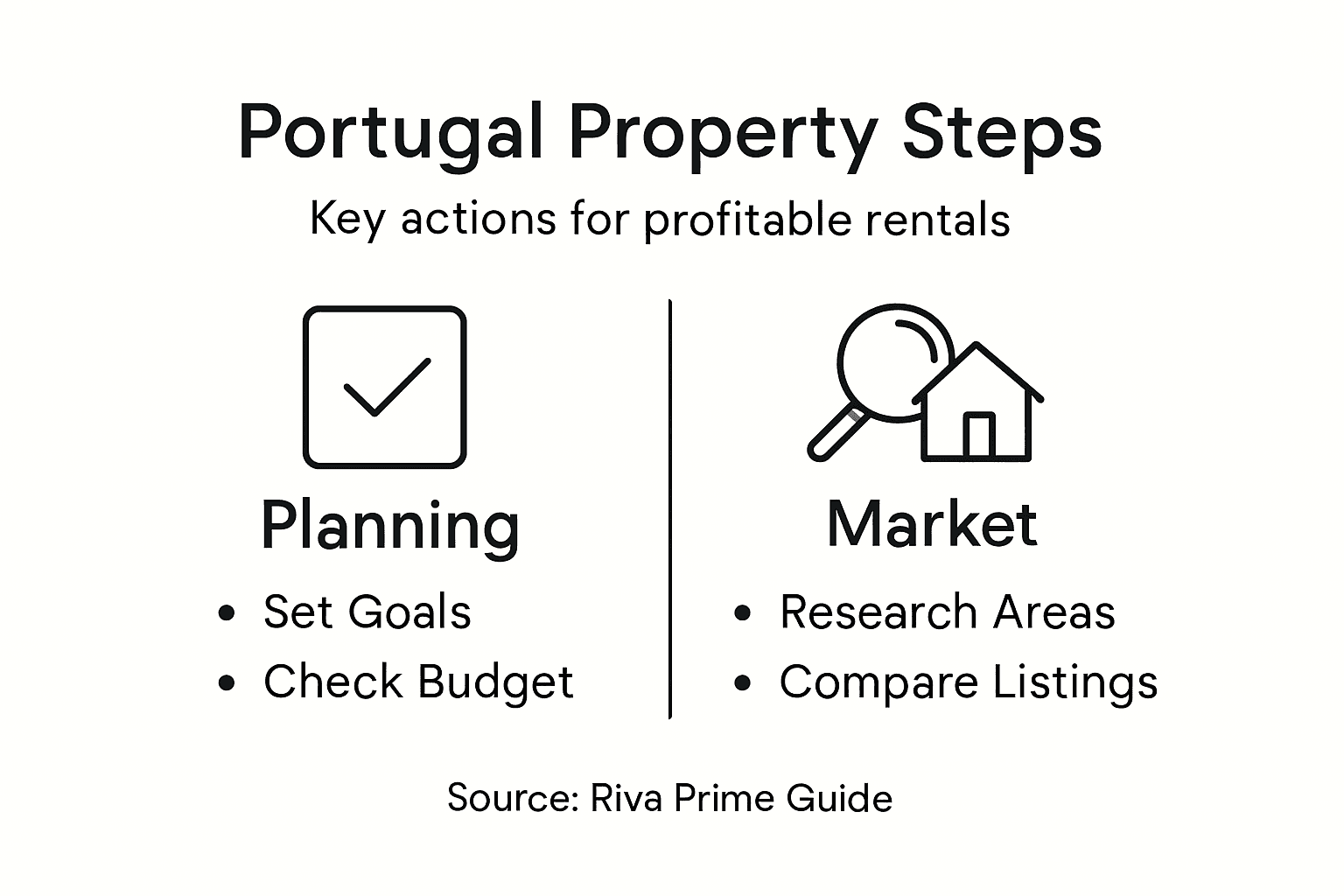
Step 2: Research Lagos Property Market Opportunities
Now that you know what you’re looking for financially, it’s time to understand the Lagos market itself. This is where most European investors make their first real mistake. They fall in love with a property’s aesthetics or location without understanding the broader market dynamics that determine whether their investment will actually perform. Lagos offers tremendous opportunities, but only if you approach the research methodically and avoid getting swept up in the romantic appeal of coastal living.

Start by analyzing the current rental market in Lagos. What are vacation rental prices in different neighborhoods? How do beachfront properties perform compared to those one or two blocks inland? What’s the average occupancy rate throughout the year, and when do the peak seasons occur? You’ll discover that summer months generate substantially different income than winter months. Look at comparable properties currently listed for sale and their asking prices, then research what they actually sold for. The gap between asking price and selling price tells you whether it’s a buyer’s market or seller’s market. Understand what types of properties generate the strongest returns. Studios and one-bedroom apartments often have higher occupancy rates and lower maintenance costs, while three-bedroom villas attract larger families willing to pay premium nightly rates but may sit empty more frequently. Research what you can realistically earn from a property in Lagos so your expectations align with actual market performance rather than wishful thinking.
Dig into the local economic factors that influence property values and rental demand. Is Lagos growing as a tourist destination? Are there infrastructure improvements happening that could increase property values? What’s the political and regulatory environment for foreign property ownership? Are there any changes to local taxation or holiday rental regulations on the horizon? Talk to other property owners in the area. Not the real estate agents selling properties, but actual owners who can tell you about seasonal vacancy patterns, maintenance surprises, and realistic expenses. Look at guest review patterns on vacation rental platforms to understand what travelers value most and what complaints appear repeatedly. Check demographic trends too. Are more remote workers from Europe choosing to spend extended stays in the Algarve? Are families with children becoming a larger portion of visitors? These patterns influence which property types and locations will appreciate fastest.
Don’t skip the neighborhood research either. Walk the streets at different times of day. Where are tourists concentrated? What amenities exist nearby? Is parking available? How close is the beach to various properties? Some investors make decisions purely on spreadsheets without ever visiting Lagos in person, and they frequently regret that choice. Visit the area during low season, not just peak season, so you see what the market looks like when most tourists have left. This matters enormously for understanding how quickly your property might sit empty between bookings.
Pro tip Create a comparison spreadsheet tracking at least 15-20 similar properties in your target area, noting their listing prices, estimated rental income, occupancy rates from online reviews, and time on market, which gives you a realistic baseline for evaluating any property you find.
Step 3: Secure Legal and Financial Support Remotely
This is where your investment moves from theory to reality. You need qualified professionals in Portugal handling the legal and financial details while you manage everything from your home office in Germany, France, or wherever you are in Europe. The good news is that Portugal’s legal framework supports remote property transactions through digital communication and power of attorney arrangements. The challenge is finding the right people who understand both Portuguese law and the specific needs of foreign investors.
Start by engaging a local Portuguese attorney who specializes in real estate transactions. This person becomes your eyes and ears on the ground. They’ll handle due diligence on the property, verify ownership records, check for outstanding taxes or liens, and ensure all documentation is legitimate. Your attorney should also guide you through obtaining a NIF, which is Portugal’s taxpayer identification number that you’ll need for the purchase and for managing rental income. Don’t try to do this yourself through Portuguese bureaucracy. A good attorney knows exactly which forms to submit and which offices to visit, saving you weeks of confusion. Many European investors make the mistake of hiring a cheap attorney to save money, then spend thousands fixing problems that emerged later. Securing legal and financial support remotely involves engaging local attorneys for due diligence and ensuring adherence to Portuguese property laws. You’ll want someone who communicates clearly in English and has experience with international buyers.
On the financial side, you need a good accountant or tax advisor who understands both Portuguese tax law and how rental income will be taxed in your home country. Portugal and most European Union countries have tax treaties to prevent double taxation, but you need someone who knows your specific situation. They’ll help you understand the costs of property ownership including property taxes, insurance, and any applicable rental income taxes. If you’re financing through a mortgage, your attorney and accountant can guide you through what’s required. Some Portuguese banks offer mortgages to foreign residents, though you’ll typically need to be physically present for the final signature. Your attorney can arrange power of attorney documents so you don’t have to travel to Portugal for every signing. This is where remote investing becomes practical. You handle the big decisions, review documents electronically, and use digital signatures and power of attorney to complete the transaction without camping out at a notary’s office in Lagos.
Set up systems for handling payments and financial tracking from abroad. You’ll need a way to receive rental income from guests. Many remote investors use international payment platforms or have Portuguese business accounts set up to receive bookings. Discuss this with your accountant as part of your overall tax strategy. They can also recommend accounting software that tracks rental expenses, guest payments, and maintenance costs. This documentation becomes crucial for tax filings and for proving your investment performance if you ever decide to sell.
Dica profissional Before hiring any attorney or accountant, ask for references from other foreign property owners they’ve worked with and specifically request to speak with someone from your home country who can vouch for their professionalism and communication style, which prevents most problems before they start.
Step 4: Complete Property Acquisition and Due Diligence
You’ve found a property you like, and now comes the critical phase where most problems emerge. This is where thorough due diligence separates successful investors from those who discover expensive surprises after signing. The acquisition process in Portugal involves document verification, legal contracts, and final registration. It sounds straightforward until you realize that one overlooked detail can cost you thousands in unexpected repairs or legal complications.
Once you’ve identified a property you want to pursue, your attorney needs to conduct comprehensive document analysis immediately. This goes far beyond what a typical property appraisal covers. Your attorney will verify actual ownership of the property by checking the land registry records. They’ll search for any outstanding debts, liens, or mortgages against the property that could follow you into ownership. They’ll verify that property taxes have been paid and that the property complies with local building codes and regulations. They’ll check whether the property has all necessary licenses and permits if it’s being used as a vacation rental. This is where comprehensive document analysis checks ownership, debts, and compliance to ensure you’re not inheriting someone else’s problems. Don’t skip this step to save a few hundred euros on legal fees. One investor discovered after purchase that the previous owner had unpaid property taxes spanning seven years. The new owner became legally responsible for those debts. Another found that the property’s commercial license had lapsed, meaning they couldn’t legally operate it as a vacation rental without expensive reapplication procedures.
After your attorney confirms the property is clean, the negotiation phase begins. You’ll make an offer, potentially back and forth with counteroffers until you agree on a price. Once you’ve settled on terms, you’ll sign a promissory contract that locks in those terms and holds the property while you finalize financing and conduct remaining inspections. This contract typically requires a deposit, usually around ten percent of the purchase price. The promissory contract gives you time to arrange your mortgage if you’re financing the purchase, and it protects both parties by documenting the agreed upon sale terms. Read this contract carefully with your attorney before signing anything. Some properties require additional inspections for structural integrity, electrical systems, or potential moisture problems. In coastal areas like Lagos, sea salt can cause corrosion that’s expensive to repair. Have a trusted inspector examine the property thoroughly if you haven’t visited in person.
The final step is the deed transfer at a notary office in Portugal. Your attorney can represent you using power of attorney documents, meaning you don’t need to travel to Portugal for this signing. The notary verifies that both buyer and seller understand the terms, ensures all taxes are paid, and registers the property in your name at the land registry. Once this is complete, you own the property. Some investors make the mistake of thinking they own the property as soon as they sign the promissory contract. Not true. Ownership transfers only after the final deed is signed and registered. Until that moment, the seller could theoretically back out, though they’d face legal consequences.
Dica profissional Request a detailed timeline from your attorney at the start of the acquisition process so you know exactly when each step will happen, including when your funds need to be available, which prevents last minute scrambling and allows you to coordinate financing perfectly.
Step 5: Activate Rental Management and Monitor Returns
Ownership is just the beginning. Now your property needs to generate the income you projected, and that requires smart management from day one. Whether you handle everything yourself or hire a professional property manager, you need systems in place that track every euro coming in and every expense going out. This is where many European investors get overwhelmed, especially those managing remotely from another country.
Your first decision is whether to self manage or hire a professional property manager. Self management means you handle guest communications, bookings, check ins, cleanings, maintenance coordination, and problem solving directly. You’ll respond to messages at all hours from guests asking where to find the WiFi password or complaining about a leaky faucet. Some remote workers actually enjoy this level of control. Others quickly realize they’ve traded one demanding job for another. Professional property managers typically charge between twelve and twenty percent of your rental income and handle everything operationally. They list your property on vacation rental platforms, manage guest communication, coordinate cleanings, arrange maintenance, and handle complaints. For remote investors managing from abroad, professional management often makes sense because it removes the stress of being the first responder to problems at three in the morning. Test out what you can realistically earn from a property in Lagos by understanding what percentage of income will go to management, taxes, insurance, and maintenance before deciding whether your return targets are still realistic after all expenses.
To help choose your property management strategy, compare the main differences:
| Aspect | Self-Management | Professional Management |
|---|---|---|
| Time Commitment | High, daily involvement | Low, hands-off |
| Cost | Lower direct costs | 12–20% of income |
| Control | Full personal oversight | Relies on manager expertise |
| Problem Response | Personally handle issues | Manager resolves problems |
Set up proper systems for tracking income and expenses immediately. Create a spreadsheet or use accounting software to document every booking, every euro paid by guests, and every expense you incur. Track platform fees if you’re listing on Airbnb or Booking.com, cleaning costs, maintenance expenses, property taxes, insurance premiums, utility bills, and any supplies you purchase for the property. This documentation becomes essential for tax filing and for accurately calculating your actual return on investment. Many investors discover six months into ownership that their actual expenses are significantly higher than they projected. Unexpected repairs happen. Guests damage things. Cleaning costs increase. By tracking everything from month one, you can adjust your pricing or management approach before the problems compound. You’ll also need this documentation for your accountant when filing taxes, and it proves your investment performance if you ever decide to sell.
Monitor your returns quarterly, not just annually. Every three months, review your occupancy rate, average nightly rate, total revenue, and total expenses. Calculate your return on investment to see whether you’re on track to hit your targets. Are bookings strong during shoulder seasons or are you only getting summer guests? Is your pricing competitive compared to similar properties? Are maintenance costs running higher than expected? If something isn’t working, address it early. If occupancy is low, maybe your pricing is too high or your listing description needs improvement. If guests consistently complain about cleanliness, maybe your cleaning service needs replacement. If maintenance costs are excessive, maybe the property needs updates to prevent future problems. Remote management requires discipline and attention to details, but it’s absolutely achievable if you establish systems and review performance regularly. Many successful vacation rental investors spend just an hour or two monthly on oversight once management systems are established.
Dica profissional Set up a separate business bank account in Portugal specifically for your rental property income and expenses, which simplifies tax reporting, makes expense tracking automatic, and gives your accountant clear records without mixing personal and investment finances.
Unlock Your Algarve Property Investment with Expert Support from Riva Prime
Navigating the complex journey of securing profitable rental properties in Lagos requires more than just good intentions. The challenges highlighted in the article—from defining clear investment goals and understanding local market dynamics to securing reliable legal and financial assistance remotely—can quickly overwhelm even the most determined investors. If you are seeking to avoid costly surprises during due diligence or struggle with managing your rental property from afar, Riva Prime specializes in addressing these exact pain points. Our comprehensive services include tailored property research, expert legal guidance, and professional rental management designed specifically for international clients who want to capitalize on Lagos’ thriving real estate market.

Ready to turn your investment goals into reality and enjoy hassle-free rental income? Explore how Riva Prime supports European investors through every step of their journey. Whether you need help assessing the Lagos market, securing legal and financial expertise, or activating efficient rental management, trust us as your local partner committed to maximizing your returns with transparency and expertise. Begin your profitable property investment now by visiting Riva Prime and discover the full range of services crafted for success.
Najczęściej zadawane pytania
What are the first steps to assess my investment goals for property in Portugal?
Start by defining specific investment objectives, such as the monthly rental income you aim to achieve or your desired time horizon for holding the property. For example, you might aim for €800 in passive income within 18 months. Document these goals to guide your property evaluation process.
How do I research the rental market to find profitable properties?
Analyze the current rental prices in various neighborhoods and determine occupancy rates and seasonal demand. Begin by creating a comparison spreadsheet of at least 15-20 similar properties, tracking listing prices and estimated rental income to identify trends and opportunities.
What legal support do I need when investing in property remotely?
Engage a local attorney specializing in real estate transactions in Portugal who can handle due diligence and verify ownership records. Make sure they are experienced with foreign investors and can assist in obtaining necessary identification numbers.
How can I ensure thorough due diligence before finalizing a property acquisition?
Conduct a comprehensive document analysis through your attorney to verify ownership, check for any outstanding debts, and ensure compliance with local regulations. Request a detailed checklist of all necessary inspections and documentation to avoid unexpected costs later.
Should I self-manage my rental property or hire a property manager?
Decide based on your availability and preference for involvement. Self-management requires substantial time commitment and effort, while hiring a professional property manager typically costs 12-20% of rental income but can alleviate daily operational burdens.
What systems should I have in place for tracking rental income and expenses?
Set up a dedicated system, such as a spreadsheet or accounting software, to document all income from guests and expenses incurred for maintenance or utilities. Track these financials monthly to monitor profitability and make adjustments as needed.