Choosing the right rental management strategy can feel complex for European Union investors who own holiday properties in Algarve. Remote ownership often means juggling tenant relations, local regulations, and unpredictable expenses, all from miles away. Understanding the fundamentals of professional property management helps transform Algarve real estate from an ongoing challenge into a reliable source of income while safeguarding long-term value and reducing operational stress.
Spis treści
- Defining Rental Management For Property Owners
- Key Types: Short-Term Vs. Long-Term Rentals
- How Rental Management Works Remotely
- Ramy prawne i zgodność z przepisami w Portugalii
- Costs, Liabilities, And Owner Responsibilities
- Common Risks And Mistakes To Avoid
Kluczowe wnioski
| Punkt | Szczegóły |
|---|---|
| Effective Rental Management | A professional rental management service helps property owners maximize income by handling tenant screening, lease management, and compliance. |
| Short-Term vs. Long-Term Rentals | Investors must carefully evaluate their rental strategy, balancing income potential and management complexity between short-term and long-term options. |
| Remote Management Capabilities | Utilizing digital tools allows remote rental management, enhancing communication and operational control over property investments from any location. |
| Understanding Legal Compliance | Familiarity with local regulations in Portugal is vital to avoid fines and ensure responsible property ownership in the rental market. |
Defining Rental Management for Property Owners
Rental management represents a specialized professional service designed to help property owners maximize their investment potential while minimizing operational complexities. At its core, property management involves strategic oversight of real estate assets, ensuring they generate consistent revenue and maintain long-term value.
For European Union investors targeting holiday properties in the Algarve region, rental management transforms property ownership from a potential administrative burden into a streamlined, profitable venture. The process encompasses several critical responsibilities that go far beyond simple rent collection:
- Tenant Screening: Comprehensive background checks and verification of potential renters
- Lease Management: Drafting, executing, and monitoring rental agreements
- Rent Collection: Ensuring timely payments and managing financial transactions
- Maintenance Coordination: Scheduling repairs, inspections, and property upkeep
- Marketing: Promoting the property across relevant rental platforms
Professional rental managers essentially act as intermediaries between property owners and tenants, handling the intricate daily operations that can overwhelm individual investors. By leveraging local expertise and robust systems, they transform real estate from a potential stress point into a reliable income stream.
Effective rental management isn’t just about collecting rent—it’s about strategically positioning your property to attract quality tenants and maximize return on investment.
Documentation and Compliance play a crucial role in successful rental management. This includes maintaining accurate financial records, adhering to local rental regulations, and managing tax-related documentation—tasks that can be particularly complex for international property owners.
Wskazówka: When selecting a rental management service, prioritize providers with deep local market knowledge and proven track records in managing properties similar to your specific investment.
Key Types: Short-Term vs. Long-Term Rentals
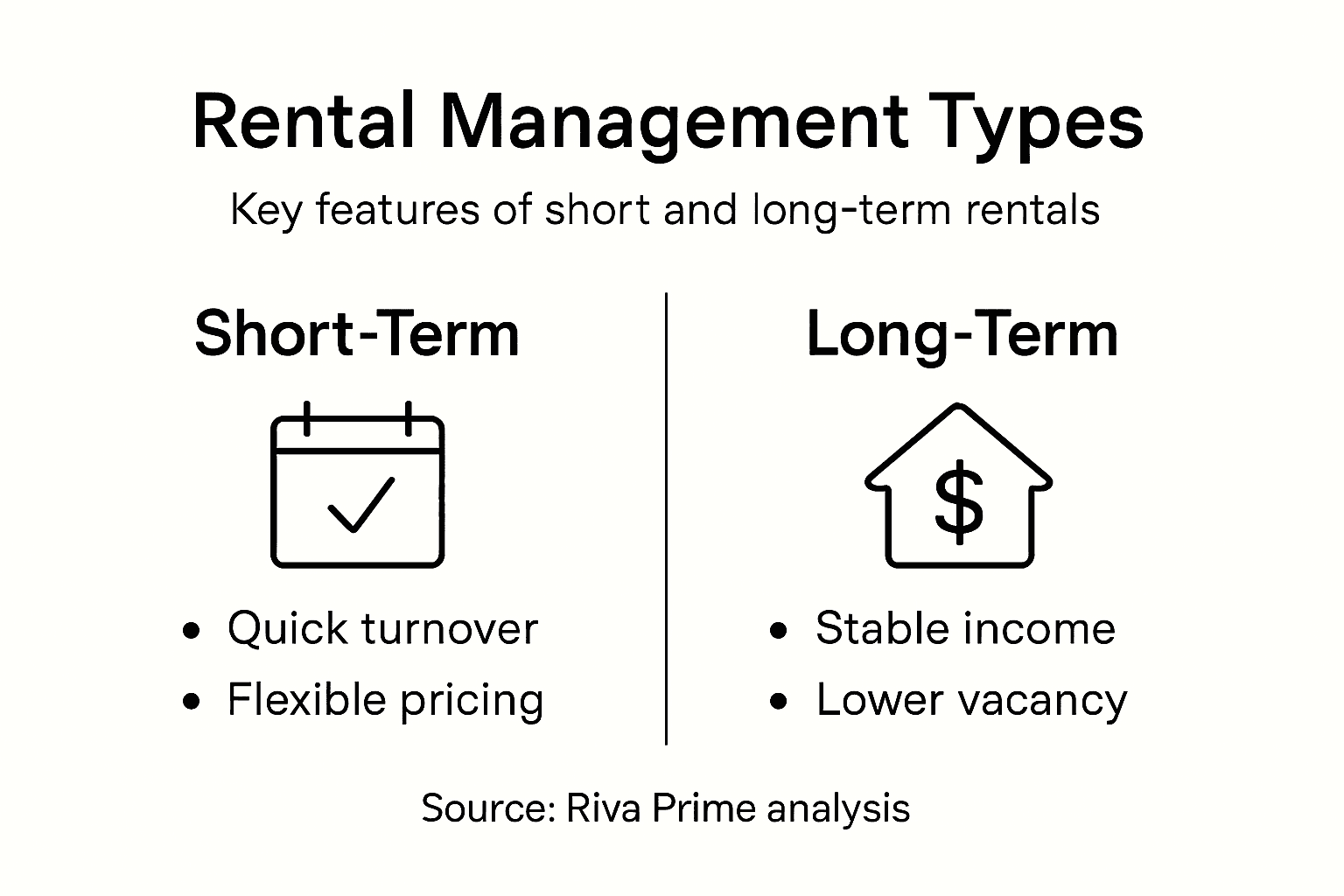
Investors in the Algarve property market face a critical decision when selecting rental strategies: choosing between wynajem krótkoterminowy (STRs) and long-term rentals. Each approach offers distinct advantages and challenges that can significantly impact investment returns and management complexity.
Short-term rentals in the European Union759356_EN.pdf) typically cater to tourists and temporary visitors, providing flexible accommodation options with higher potential income but increased regulatory scrutiny. These rentals are characterized by:
- Shorter booking periods (days to weeks)
- Higher nightly/weekly rates
- More frequent tenant turnover
- Greater marketing and maintenance demands
- Potential for seasonal income fluctuations
Long-term rentals, by contrast, offer a more stable and predictable revenue stream. These arrangements typically involve month-to-month or annual leases, appealing to residents seeking consistent housing. Their key characteristics include:

To clarify your options, here is a side-by-side comparison of short-term and long-term rental strategies:
| Aspekt | Short-Term Rentals | Long-Term Rentals |
|---|---|---|
| Typical Tenants | Tourists, business travelers | Residents, expatriates |
| Revenue Predictability | Seasonally variable | Consistent, month-to-month |
| Regulatory Challenge | Stricter, changes frequently | More straightforward |
| Owner Involvement | Frequent coordination needed | Low-touch management |
| Market Sensitivity | High (responds to demand spikes) | Lower (stable occupancy rates) |
- Consistent monthly income
- Lower tenant turnover
- Reduced management overhead
- More straightforward legal compliance
- Potentially lower maintenance costs
The optimal rental strategy depends on balancing potential income, management capacity, and local market dynamics.
Deciding between short-term and long-term rentals requires careful analysis of several factors, including property location, target market, personal management capabilities, and local regulatory environments. European Union investors in the Algarve must consider nuanced local regulations that can impact rental strategies.
Wskazówka: Consult with local property management experts who understand the Algarve market to develop a rental strategy tailored to your specific investment goals and property characteristics.
How Rental Management Works Remotely
Remote rental management has transformed from a challenging concept to a streamlined process, thanks to advanced digital technologies that enable property owners to oversee their investments from anywhere in the world. Digital technologies are revolutionizing property management by providing real-time insights and comprehensive operational control without physical presence.
The core infrastructure of remote rental management relies on several critical technological and operational components:
- Cloud-Based Property Management Software: Centralizes all property data, communications, and financial tracking
- Digital Communication Platforms: Enables instant communication with tenants, maintenance professionals, and local representatives
- Smart Home Technologies: Allows remote monitoring of property conditions and security
- Automated Financial Systems: Streamlines rent collection, expense tracking, and financial reporting
- Online Maintenance Request Portals: Facilitates quick and transparent issue resolution
Successful remote management requires establishing robust communication protocols and leveraging technology to bridge geographical distances. This involves creating detailed standard operating procedures, implementing comprehensive digital documentation systems, and developing strong relationships with local service providers who can act as your eyes and hands on the ground.
Remote property management is not about eliminating human interaction, but about creating more efficient, transparent, and responsive systems that transcend physical limitations.
The accountability and productivity of remote rental management depend on carefully designed systems that provide real-time transparency. Remote work policies emphasize structured communication and precise performance tracking, principles that directly apply to managing rental properties across international boundaries.
Wskazówka: Invest in comprehensive property management software that offers robust reporting, communication, and financial tracking features to ensure seamless remote management of your Algarve rental property.
Legal Framework and Compliance in Portugal
Navigating the legal landscape of property rental in Portugal requires a comprehensive understanding of complex regulatory requirements that protect both property owners and tenants. Rental property regulations in the European Union759356_EN.pdf) are designed to balance housing affordability, tourism benefits, and tenant protections through stringent licensing and compliance mechanisms.
The Portuguese legal framework for rental properties encompasses several critical compliance areas:
- Wymagania licencyjne: Mandatory registration for all rental properties
- Safety Standards: Comprehensive health and safety regulations
- Tenant Rights: Detailed protections for residential lease agreements
- Tax Compliance: Specific reporting and tax obligations for rental income
- Local Municipality Regulations: Additional regional restrictions and requirements
Property owners must pay special attention to the nuanced legal obligations that extend beyond basic rental agreements. Land management obligations in Portugal are particularly strict, with potential consequences for non-compliance including substantial fines and potential property management interventions.
Compliance is not just a legal requirement, but a fundamental aspect of responsible property ownership in Portugal.
For European Union investors, understanding these regulations requires careful navigation of local legal frameworks. This involves working with local legal experts, maintaining meticulous documentation, and staying updated on evolving regulatory requirements that can impact property rental operations.
Wskazówka: Engage a local Portuguese legal specialist who specializes in real estate to conduct a comprehensive compliance review of your rental property before listing or leasing.
Costs, Liabilities, and Owner Responsibilities
Property ownership in the Algarve region demands a comprehensive understanding of the financial and legal obligations that extend far beyond simple property acquisition. Property management responsibilities encompass complex legal and financial commitments that require strategic planning and proactive management.
European Union investors must carefully consider the multifaceted costs and liabilities associated with rental property ownership:
- Initial Investment Costs: Property purchase, renovation, and preparation expenses
- Operational Expenses: Ongoing maintenance, utilities, and property management fees
- Legal Compliance Costs: Licensing, registration, and regulatory documentation
- Insurance Expenditures: Comprehensive property and liability coverage
- Zobowiązania podatkowe: Income reporting, municipal taxes, and potential withholding requirements
Landlord responsibilities extend beyond financial considerations to include critical legal and ethical obligations. These involve ensuring tenant safety, maintaining habitable living conditions, respecting privacy rights, and promptly addressing maintenance issues.
Property ownership is a nuanced responsibility that demands financial acumen, legal awareness, and proactive management.
The financial landscape of property management requires investors to develop a sophisticated approach to risk mitigation and cost management. This involves maintaining robust financial reserves, implementing comprehensive insurance coverage, and establishing clear communication channels with tenants and local service providers.
Here is a summary of the main cost types and owner responsibilities for Algarve property investors:
| Expense/Responsibility | Description | Reason for Importance |
|---|---|---|
| Operational Expenses | Regular fees, utilities, and daily upkeep | Impacts ongoing profitability |
| Wymagania ubezpieczeniowe | Coverage against property/liability risks | Protects against major financial loss |
| Dokumentacja prawna | Accurate records and required compliance | Avoids fines and legal complications |
| Maintenance Planning | Scheduled repairs and emergency response | Ensures tenant satisfaction, asset value |
Wskazówka: Create a dedicated financial reserve of 10-15% of annual rental income to cover unexpected maintenance, legal, and operational expenses, ensuring financial resilience in your property investment strategy.
Common Risks and Mistakes to Avoid
Property investment in the Algarve requires meticulous attention to potential pitfalls that can significantly undermine investment returns. Landlord mistakes can lead to substantial financial and legal consequences, making proactive risk management crucial for European Union investors.
Common risks that property owners must carefully navigate include:
- Tenant Selection Errors: Rushing screening or accepting high-risk tenants
- Maintenance Negligence: Delaying repairs that can escalate into costly renovations
- Regulatory Non-Compliance: Failing to meet local rental and safety regulations
- Inadequate Insurance Coverage: Insufficient protection against potential liabilities
- Poor Financial Planning: Insufficient reserves for unexpected expenses
Property health and safety risks require immediate attention, particularly issues like damp and mould that can create significant legal and health complications. These environmental challenges can result in tenant health issues, potential legal actions, and substantial repair costs if not promptly addressed.
Successful property management is about anticipating and mitigating risks before they become costly problems.
Investors must develop a comprehensive risk management strategy that includes thorough tenant screening, regular property inspections, maintaining robust communication channels, and staying updated on local regulatory changes. This approach transforms potential vulnerabilities into opportunities for stable, profitable property management.
Wskazówka: Develop a detailed risk management checklist that includes quarterly property inspections, annual tenant reviews, and a contingency fund representing 15-20% of annual rental income to protect against unexpected challenges.
Discover Hassle-Free Rental Management with Riva Prime
Managing a rental property remotely in the Algarve can be overwhelming, especially when navigating tenant screening, legal compliance, and ongoing maintenance. The complexities highlighted in “What Is Rental Management and Why It Matters” underscore the importance of expert rental management to maximize your investment while minimizing stress and operational risks. Whether you are uncertain about short-term versus long-term rental strategies or concerned about staying compliant with Portuguese rental laws, professional guidance is essential to protect your asset and secure reliable income.
At Riva Prime, we specialize in providing tailored rental management solutions for European Union investors seeking a seamless, transparent experience. Our dedicated team in Lagos offers comprehensive support including property research, legal and financial assistance, and ongoing rental operations that ensure your property thrives without your constant involvement. Explore how our expertise can transform your investment journey through our comprehensive management services and discover personalized strategies crafted to fit your unique goals.
Take the first step toward stress-free rental income. Visit Riva Prime today to learn more about how our local knowledge and remote management capabilities can turn your Algarve property into a secure, profitable venture you can trust. Don’t wait to safeguard and maximize your real estate investment—connect with us now.
Najczęściej zadawane pytania
What is rental management?
Rental management is a professional service that assists property owners in overseeing their rental properties, focusing on maximizing investment potential and minimizing operational complexities.
Why is tenant screening important in rental management?
Tenant screening is essential as it helps property owners identify reliable tenants by conducting background checks and verifying income, thereby reducing the risk of unpaid rent and property damage.
What are the differences between short-term and long-term rentals?
Short-term rentals cater to tourists and offer flexible, higher income potential with frequent turnover, while long-term rentals provide a stable and predictable revenue stream through month-to-month or annual leases.
How does remote rental management work?
Remote rental management allows property owners to oversee their investments from anywhere using digital technologies, such as cloud-based software for tracking finances, communication, and maintenance requests.
Zalecane
- Zarządzanie nieruchomościami w Lagos, Algarve dla inwestorów | Riva Prime
- Inwestycje w nieruchomości w Lagos na Algarve dla nabywców z UE | Riva Prime
- Inwestycje w nieruchomości w Lagos na Algarve dla nabywców z UE | Riva Prime
- 5 Mistakes to Avoid When Renting an Apartment in Boca Raton – Luxury Apartments for Rent in Boca Raton | Premium Boca Raton Apartments | Aapartments Boca Raton