
Finding reliable ways to maximize rental returns can feel daunting for European investors seeking properties in Lagos, Portugal. Remote investment brings unique challenges, from understanding market demand to securing profitable locations. A detailed rental market analysis provides clarity through data-driven insights into pricing, vacancy trends, and local supply. By exploring proven analysis methods, this guide helps you build a more confident strategy and unlock potential for higher investment returns without onsite risks.
Table of Contents
- What Is Rental Market Analysis In Real Estate
- Types Of Rental Market Analysis Methods
- How Rental Market Analysis Functions
- Legal Framework And Compliance In Portugal
- Risks And Financial Implications For Investors
Key Takeaways
| Point | Details |
|---|---|
| Comprehensive Market Analysis | Conducting a thorough rental market analysis is essential for informed investment decisions, focusing on rental rates, market demand, and demographic trends. |
| Utilizing Multiple Methods | Employing various analytical approaches, including quantitative and qualitative analysis, provides deeper insights into market conditions. |
| Understanding Legal Frameworks | Familiarity with local rental laws and regulations is crucial for compliance and successful investment in any market. |
| Risk Management Strategies | Investors should proactively assess financial risks and develop strategies to mitigate potential challenges in the rental market. |
What Is Rental Market Analysis In Real Estate
Rental market analysis represents a strategic evaluation process designed to help property investors understand the complex dynamics of residential rental markets. By examining critical factors like rental rates, vacancy trends, and market demand, investors can make informed decisions about potential real estate investments. Detailed housing market interactions provide the empirical foundation for understanding these intricate market movements.
At its core, rental market analysis involves several key components that help investors assess potential opportunities:
- Rental Price Evaluation: Analyzing current and projected rental rates in specific geographic areas
- Market Supply and Demand: Understanding the balance between available rental properties and potential tenants
- Demographic Research: Examining population trends, income levels, and migration patterns
- Economic Indicators: Assessing local employment rates, economic growth, and development plans
The process of conducting a comprehensive rental market analysis requires a multi-dimensional approach. Rental market segmentation strategies highlight the importance of distinguishing between different rental types, such as vacation, seasonal, and long-term rentals. Each segment presents unique characteristics and potential investment opportunities.
Investors leverage rental market analysis to mitigate risks and optimize investment strategies. By understanding market trends, they can:
- Identify emerging neighborhoods with high growth potential
- Determine appropriate rental pricing strategies
- Predict potential vacancy rates
- Assess potential return on investment
Pro tip: Always combine quantitative data with qualitative local market insights to develop a comprehensive understanding of rental market potential.
Types Of Rental Market Analysis Methods
Rental market analysis involves multiple sophisticated methodologies that help investors comprehensively evaluate potential investment opportunities. Rental market segmentation techniques provide critical frameworks for understanding the complex dynamics of property rentals and investment potential.
The primary types of rental market analysis methods can be categorized into several key approaches:
- Quantitative Analysis: Utilizing statistical data and mathematical models to predict market trends
- Qualitative Research: Examining local market conditions, neighborhood developments, and consumer preferences
- Comparative Market Analysis: Comparing similar properties and their rental performance
- Demographic Segmentation: Studying population characteristics and their impact on rental markets
Statistical Analysis Methods represent a fundamental approach to rental market evaluation. Market research insights reveal several critical techniques investors can utilize:
- Historical Performance Tracking
- Predictive Modeling
- Consumer Behavior Pattern Assessment
- Economic Trend Correlation
Each analysis method offers unique insights into rental market potential. Demographic segmentation, for instance, helps investors understand specific market niches by examining factors like age groups, income levels, and migration patterns. This approach allows for more targeted investment strategies that align with specific market segments.

Here’s a summary of how different rental market analysis methods deliver unique advantages to investors:
| Analysis Method | Key Strength | Typical Use Case |
|---|---|---|
| Quantitative Analysis | Predicts market trends | Forecasting rent and vacancy rates |
| Qualitative Research | Reveals local nuances | Assessing neighborhood desirability |
| Comparative Market | Benchmarks performance | Pricing new rental properties |
| Demographic Segmentation | Targets niche markets | Identifying optimal tenant segments |
Effective rental market analysis combines multiple methodological approaches to generate comprehensive and nuanced market insights.
Pro tip: Always cross-reference multiple analysis methods to develop a more robust understanding of potential rental market opportunities.
How Rental Market Analysis Functions
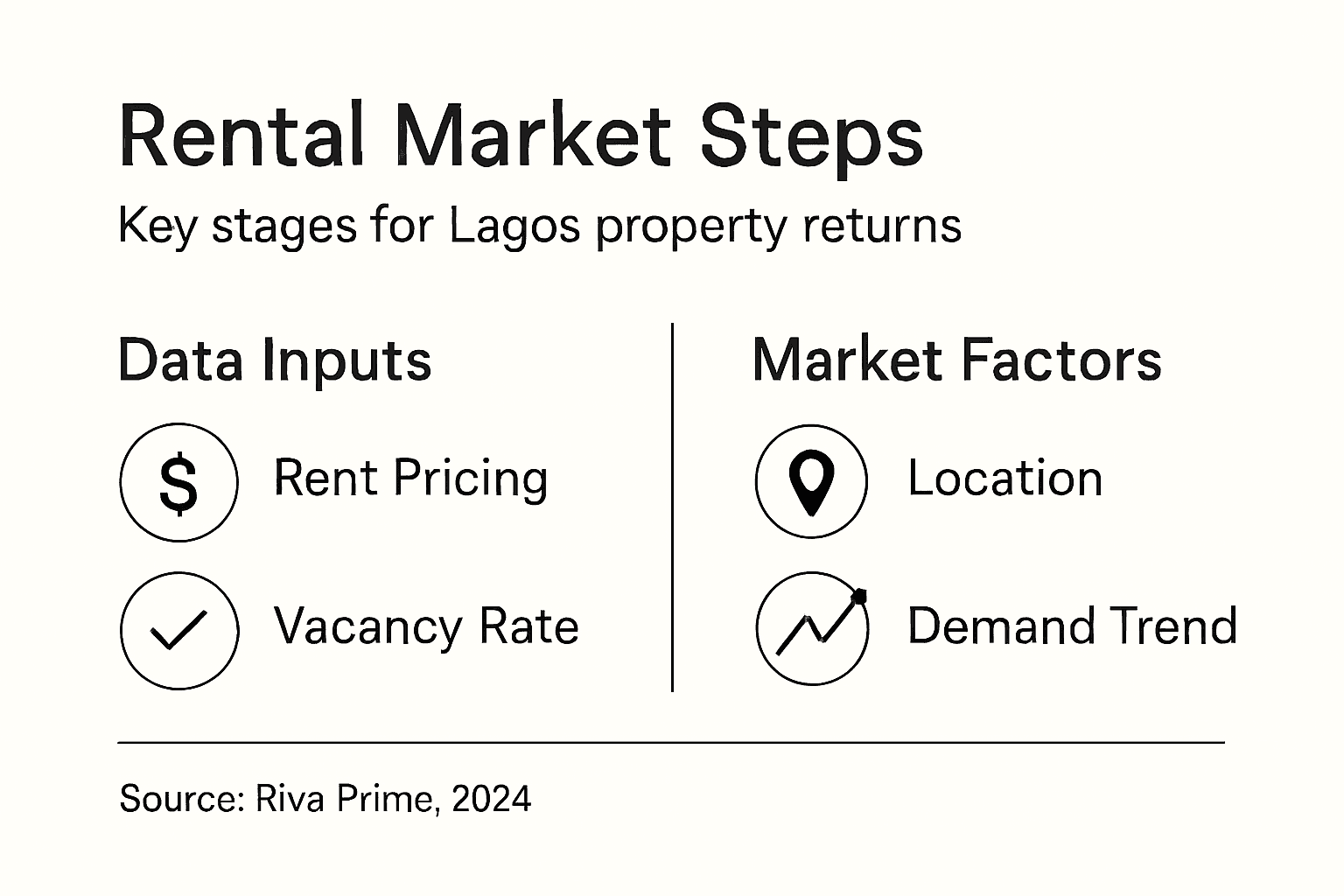
Rental market analysis operates as a comprehensive diagnostic tool for understanding property investment potential through systematic data collection and interpretation. Critical rental market data points enable investors to make informed decisions by examining multiple interconnected factors that influence rental property performance.
The functional process of rental market analysis involves several sophisticated stages:
- Data Collection: Gathering comprehensive information about local real estate markets
- Market Segmentation: Identifying specific rental market subsectors and niches
- Trend Identification: Recognizing patterns in rental pricing and demand
- Predictive Modeling: Developing forecasts based on historical and current market data
Rental market monitoring techniques reveal key operational components that drive effective market analysis. Investors and property managers typically focus on:
- Average Rental Rates
- Vacancy Rate Tracking
- Neighborhood Appreciation Trends
- Seasonal Market Fluctuations
Economic Indicators play a crucial role in understanding how rental markets function. By examining employment rates, population growth, and local economic development, analysts can predict potential shifts in rental demand and property values. This multi-dimensional approach allows for more nuanced and accurate market assessments.
Successful rental market analysis transforms raw data into actionable investment intelligence.
Pro tip: Develop a consistent data tracking system that allows you to compare market metrics across different time periods for more accurate trend analysis.
Legal Framework And Compliance In Portugal
Portuguese rental regulations create a complex legal landscape for international investors seeking to maximize returns in the real estate market. Rental market regulatory evolution demonstrates the ongoing transformation of tenant-landlord relationships and market protection mechanisms.
The key components of the Portuguese legal framework for rental properties include:
- Tenancy Contracts: Standardized legal documents defining rights and obligations
- Rent Control Mechanisms: Regulations limiting excessive rental price increases
- Tenant Protection Laws: Legal safeguards ensuring fair treatment and housing security
- Tax Compliance Requirements: Specific reporting and taxation rules for rental income
Legislative changes in rental policies have significantly impacted the rental market dynamics. Investors must navigate several critical legal considerations:
- Registration of Rental Agreements
- Compliance with Local Municipal Regulations
- Understanding Tenant Eviction Procedures
- Adhering to Property Maintenance Standards
Investor Compliance requires a thorough understanding of Portuguese legal nuances. Foreign investors must pay particular attention to documentation, tax reporting, and adherence to local regulations to avoid potential legal complications. Short-term rental regulation provides additional context for specific rental market segments.
Successful property investment in Portugal demands comprehensive legal knowledge and proactive compliance management.
Pro tip: Consult with a local legal professional specializing in Portuguese real estate law to ensure full compliance and mitigate potential regulatory risks.
Risks And Financial Implications For Investors
Investors navigating the Portuguese rental market must carefully assess multiple financial risks and potential implications. Residential real estate investment risks demonstrate that rental yields and market volatility are critical factors requiring comprehensive strategic planning.
The primary financial risks for international investors include:
- Market Volatility: Potential fluctuations in property values and rental income
- Regulatory Changes: Unexpected legal modifications affecting rental operations
- Currency Exchange Risk: Potential losses from Euro-to-home currency variations
- Maintenance Expenses: Unexpected repair and property upkeep costs
Institutional investment barriers reveal several critical financial considerations investors must evaluate:
- Profitability Potential
- Long-Term Market Stability
- Rental Yield Consistency
- Property Management Efficiency
Risk Mitigation requires a strategic approach to investment. Foreign investors should develop comprehensive risk management strategies that include diversification, thorough market research, and maintaining financial reserves. Portuguese property investment checklist can provide additional guidance for navigating potential challenges.
This reference table helps investors quickly check common financial risks and their possible impact when entering Portugal’s rental market:
| Risk Type | Example Impact | Investor Response |
|---|---|---|
| Market Volatility | Unstable rental income | Employ long-term pricing strategy |
| Regulatory Changes | Changes in eviction rules | Seek legal advice regularly |
| Currency Risk | Lower returns after conversion | Hedge against currency shifts |
| Maintenance Expenses | Costly emergency repairs | Maintain contingency reserves |
Successful real estate investment demands a proactive approach to identifying and managing potential financial risks.
Pro tip: Allocate at least 10-15% of your expected rental income as a contingency fund to manage unexpected expenses and market fluctuations.
Unlock Maximum Returns with Expert Rental Market Analysis in Lagos
Navigating Lagos’s rental market requires a clear understanding of rental price evaluations, vacancy trends, and demographic shifts. If you are facing challenges like predicting rental yields or managing legal complexities, Riva Prime offers tailored solutions built on deep local expertise. Our comprehensive services include market research, legal and financial assistance, and proactive rental management designed to help you identify high-growth neighborhoods and optimize your investment strategy with confidence.

Don’t let market volatility or regulatory changes hold back your investment potential. Visit Riva Prime’s real estate portal now to access detailed property listings, personalized advisory, and seamless support crafted for international investors. Take advantage of expert rental market analysis and start maximizing your returns in Lagos today with Riva Prime.
Frequently Asked Questions
What is rental market analysis in real estate?
Rental market analysis is a strategic evaluation process that helps property investors understand critical factors like rental rates, vacancy trends, and market demand to make informed investment decisions.
What methods are used in rental market analysis?
Methods include quantitative analysis, qualitative research, comparative market analysis, and demographic segmentation, each providing unique insights into market trends and investment opportunities.
How does rental market analysis function?
It functions through stages of data collection, market segmentation, trend identification, and predictive modeling to provide comprehensive insights into rental property potential.
What are some financial risks associated with real estate investment?
Financial risks include market volatility, regulatory changes, currency exchange risk, and unexpected maintenance expenses, all of which require strategic planning and risk management.
Recommended
- What You Can Really Earn from a Property in Lagos, Portugal.
- Why Buy-to-Let in Algarve: Profitable Rental Insights – RIVA PRIME CONSULTING
- Lagos the Hidden Gem Every Investor Should Know About! – rivaprime.eu
- Step by Step Property Investment Portugal: Secure Profitable Rentals – RIVA PRIME CONSULTING
- Step-by-Step Guide to Analyzing Investment Properties | Bold Street AI
- How to Negotiate Rent Price and Win Your Lease – Luxury Apartments for Rent in Boca Raton | Premium Boca Raton Apartments | Aapartments Boca Raton