
Wbrew powszechnemu przekonaniu Portugalia nie nakłada żadnych ograniczeń na posiadanie nieruchomości przez cudzoziemców. Międzynarodowi inwestorzy mają takie same prawa jak obywatele Portugalii przy zakupie nieruchomości w regionie Algarve. W ramach ostatnich reform podatkowych z 2026 r. wprowadzono dodatkową opłatę w wysokości 7,51 TP3T dla nabywców niebędących rezydentami, jednak przepisy dotyczące własności pozostają całkowicie otwarte. Niniejszy przewodnik wyjaśnia ramy prawne, obowiązki podatkowe oraz praktyczne kroki niezbędne do zgodnej z prawem inwestycji w nieruchomości w najbardziej poszukiwanym regionie przybrzeżnym Portugalii.
Spis treści
- Wprowadzenie do kwestii własności zagranicznej w Portugalii
- Ramy prawne i prawa własności
- Podatki i opłaty dla nabywców zagranicznych
- Proces zakupu nieruchomości i dokumentacja
- Typowe błędne przekonania dotyczące własności zagranicznej w Portugalii
- Kwestie praktyczne dla inwestorów zagranicznych w regionie Algarve
- Wnioski i dalsze działania dla inwestorów
- Poznaj profesjonalne usługi w zakresie nieruchomości związane z Twoją inwestycją w regionie Algarve
Kluczowe wnioski
| Punkt | Szczegóły |
|---|---|
| Brak ograniczeń dotyczących własności | W Portugalii nabywcy zagraniczni mogą kupować nieruchomości bez konieczności spełnienia wymogów dotyczących miejsca zamieszkania lub obywatelstwa. |
| Numer identyfikacji podatkowej jest obowiązkowy | Wszyscy zagraniczni nabywcy muszą przed dokonaniem zakupu uzyskać portugalski numer identyfikacji podatkowej (NIF). |
| Dodatkowa opłata podatkowa dla osób niebędących rezydentami | Od 2026 r. nabywcy zagraniczni płacą ryczałtowy podatek od przeniesienia własności w wysokości 7,51 TP3T oraz progresywne stawki podatku IMT. |
| Równe prawa własności | Cudzoziemcy mają takie same prawa do własności, dzierżawy i użytkowania jak obywatele Portugalii. |
| Posiadanie nieruchomości nie uprawnia do uzyskania prawa pobytu | Posiadanie nieruchomości nie uprawnia do uzyskania praw imigracyjnych ani zezwoleń na pobyt. |
Wprowadzenie do kwestii własności zagranicznej w Portugalii
Portugalia posiada jeden z najbardziej dostępnych rynków nieruchomości w Europie dla nabywców zagranicznych. Cudzoziemcy, w tym obywatele państw spoza UE, mogą legalnie nabywać nieruchomości mieszkalne bez żadnych ograniczeń dotyczących obywatelstwa lub miejsca zamieszkania od 2026 roku. Ramy prawne traktują właścicieli zagranicznych na równi z obywatelami Portugalii, przyznając im pełne prawa do zarządzania, wynajmowania lub sprzedaży nieruchomości.
Algarve wyróżnia się jako najważniejszy region Portugalii pod względem międzynarodowych inwestycji w nieruchomości. Panujący tu przez cały rok klimat śródziemnomorski, nowoczesna infrastruktura oraz stabilna sytuacja rynkowa przyciągają nabywców z całej Europy, Ameryki Północnej i innych części świata. Zagraniczni inwestorzy nabywają domy wakacyjne, nieruchomości na wynajem oraz rezydencje dla emerytów w Lagos, Albufeirze, Vilamourze i okolicznych nadmorskich miejscowościach.
Do najważniejszych korzyści dla zagranicznych nabywców należą:
- Pełne prawa własności na równi z obywatelami Portugalii
- Swoboda wynajmowania nieruchomości na krótki lub długi okres bez konieczności uzyskiwania specjalnych zezwoleń
- Możliwość sprzedaży lub przeniesienia własności nieruchomości bez zgody władz
- Dostęp do portugalskich kredytów hipotecznych za pośrednictwem lokalnych banków
- Przejrzysty system ewidencji gruntów chroniący roszczenia własnościowe
Międzynarodowi nabywcy nie spotykają się z żadną dyskryminacją przy transakcjach dotyczących nieruchomości. The kroki do zakupu nieruchomości w Algarve są analogiczne do tych obowiązujących mieszkańców Portugalii i wymagają standardowej analizy due diligence, zawarcia umów prawnych oraz dopełnienia formalności rejestracyjnych. Otwartość rynku w połączeniu z atrakcyjnością stylu życia w tym regionie stwarza wyjątkowe możliwości dla inwestycje w nieruchomości w Portugalii dla nabywców z UE.
Zrozumienie zasad dotyczących własności w Portugalii pomaga inwestorom w pewnym przeprowadzaniu transakcji. The Analiza portugalskiego rynku nieruchomości wskazują na stały popyt ze strony międzynarodowych nabywców, zwłaszcza w najbardziej atrakcyjnych lokalizacjach regionu Algarve. To przewodnik po własności nieruchomości przez cudzoziemców w Portugalii przedstawia wyczerpujący kontekst dla kwestii prawnych i praktycznych.
Ramy prawne i prawa własności
Portugalski Kodeks Cywilny gwarantuje całkowitą równość między zagranicznymi a krajowymi właścicielami nieruchomości. Cudzoziemcy mogą nabywać nieruchomości mieszkalne, korzystając z takich samych gwarancji prawnych i możliwości związanych z własnością, jakie przysługują obywatelom Portugalii. Przepisy te obejmują mieszkania w miastach, posiadłości wiejskie, budynki komercyjne oraz grunty niezabudowane na całym obszarze regionu Algarve.
Przed podpisaniem jakiejkolwiek umowy kupna zagraniczni nabywcy muszą uzyskać portugalski numer identyfikacji podatkowej (NIF). Ten dziewięciocyfrowy numer pełni funkcję numeru identyfikacyjnego do celów podatkowych. Proces rejestracji w celu uzyskania numeru NIF trwa od jednego do trzech tygodni i wymaga okazania paszportu, dowodu adresu zamieszkania oraz umówienia się na spotkanie w urzędzie skarbowym lub za pośrednictwem przedstawiciela podatkowego.
Portugalia uznaje kilka rodzaje praw własności dostępne w równym stopniu dla obcokrajowców:
- Własność z prawem do dysponowania nieruchomością: Pełne prawa do nieruchomości i gruntów na czas nieokreślony – najczęściej wybierana opcja przez nabywców zagranicznych
- Użytkowanie: Prawo do korzystania z majątku i czerpania z niego korzyści bez posiadania pełnego prawa własności, często stosowane w planowaniu spadkowym
- Prawo dzierżawy: Długoterminowe umowy najmu, w których prawa własności są ograniczone okresem obowiązywania umowy
- Współwłasność: Wspólna własność kilku podmiotów z określonymi udziałami procentowymi
Prawo własności dominuje wśród zakupów dokonywanych przez obcokrajowców, ponieważ zapewnia maksymalną kontrolę i ułatwia odsprzedaż. Nabywcy otrzymują akt własności (escritura), który potwierdza ich prawo własności w rejestrze gruntów, tworząc publiczny wpis chroniący przed przyszłymi roszczeniami. System rejestru prowadzi przejrzystą historię tytułów własności, co ułatwia przeprowadzenie analizy due diligence.
Zagraniczni właściciele mogą obciążać nieruchomość hipoteką, przeprowadzać remonty, wynajmować ją lub sprzedawać bez konieczności uzyskiwania zgody władz. Ta swoboda obejmuje również krótkoterminowy wynajem wakacyjny, choć niezależnie od narodowości właściciela obowiązują gminne wymogi licencyjne. Pomoc prawna dla nabywców nieruchomości pomaga w poruszaniu się po tych wymogach administracyjnych, zapewniając jednocześnie pełną zgodność z przepisami.

Najnowsze informacje dotyczące własności nieruchomości w Portugalii przez podmioty zagraniczne potwierdzają, że pomimo ostatnich zmian podatkowych nie nastąpiły żadne zmiany w zakresie podstawowych praw własności. Międzynarodowi inwestorzy zachowują nieograniczony dostęp do portugalskich rynków nieruchomości we wszystkich regionach i w odniesieniu do wszystkich rodzajów nieruchomości.
Podatki i opłaty dla nabywców zagranicznych
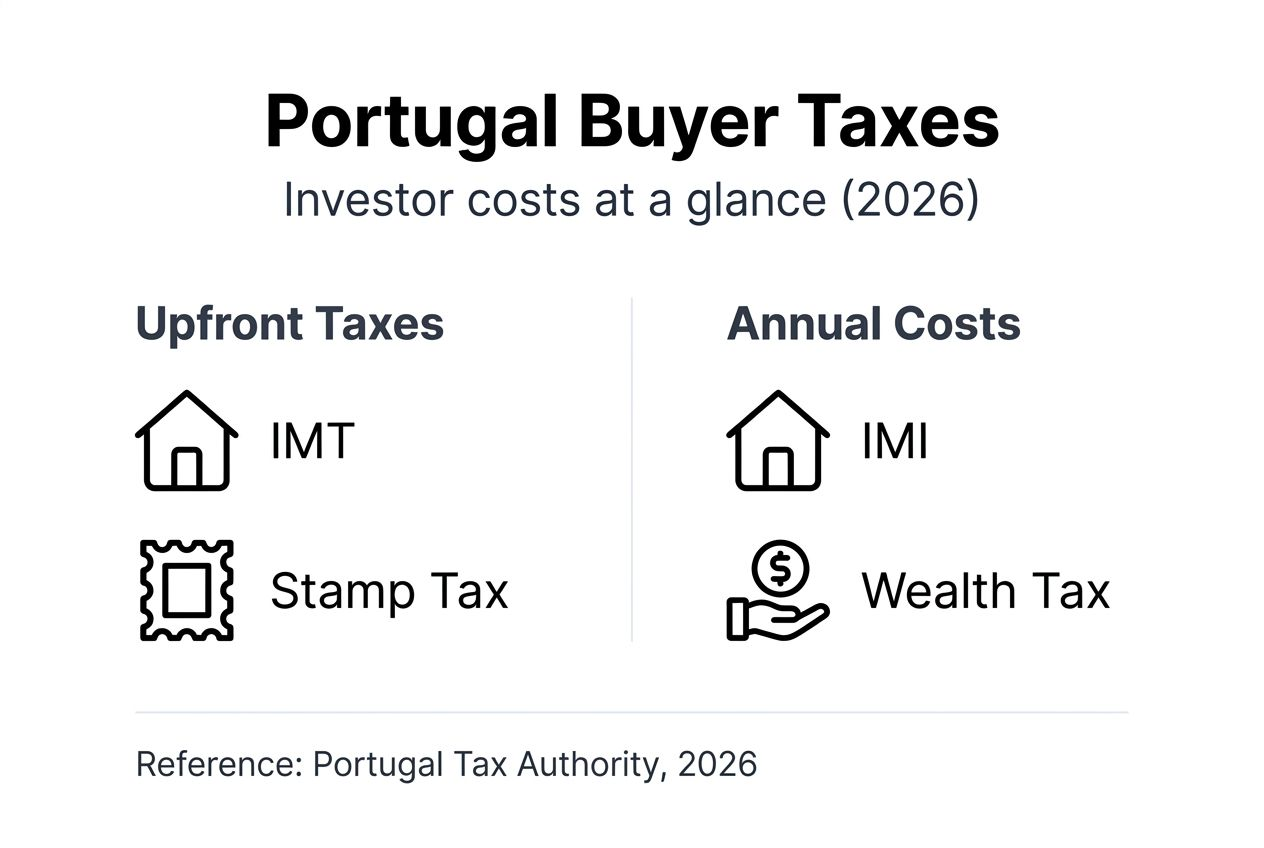
Zagraniczni nabywcy nieruchomości w Portugalii mają do czynienia ze złożoną strukturą podatkową, obejmującą podatki od przeniesienia własności, roczne podatki od nieruchomości oraz ewentualne podatki od majątku. Zrozumienie tych obowiązków pozwala uniknąć nieoczekiwanych wydatków i zapewnia zgodność z przepisami prawa.
Podatek od przeniesienia własności nieruchomości (IMT)
Podatek IMT (Imposto Municipal sobre Transmissões) jest naliczany progresywnie w zależności od wartości nieruchomości. Cudzoziemcy niebędący rezydentami płacą dodatkowy, ryczałtowy podatek od transferu w wysokości 7,51 TP3T IMT przedstawione przez Portugalska ustawa o mieszkalnictwie z 2026 r.. Opłata ta ma na celu ograniczenie zakupów spekulacyjnych, a jednocześnie zapewnienie dochodów budżetowych.
Standardowe stawki IMT dla nieruchomości mieszkalnych:
| Wartość nieruchomości | Stawka IMT |
|---|---|
| Do 92 407 euro | 0% |
| od 92 407 euro do 126 403 euro | Progresywny 2% do 5% |
| od 126 403 euro do 172 348 euro | 5% |
| od 172 348 euro do 287 213 euro | 7% |
| Powyżej 287 213 euro | 8% |
Niegmiejscowi nabywcy zagraniczni płacą dodatkowy zryczałtowany podatek w wysokości 7,51 TP3T oprócz standardowych stawek podatku od przeniesienia własności nieruchomości (IMT). W przypadku mieszkania w regionie Algarve o wartości 300 000 euro standardowy podatek IMT wynosi około 24 000 euro, a dopłata dla nierezydentów – 22 500 euro, co daje łączną kwotę podatku od przeniesienia własności w wysokości 46 500 euro.
Dodatkowe koszty związane z zakupem
Oprócz opłat za IMT nabywcy ponoszą następujące koszty:
- Opłata skarbowa w wysokości 0,81 TP3T wartości nieruchomości
- Opłaty notarialne wynoszą od 500 do 1 500 euro
- Opłaty za wpis do rejestru gruntów w wysokości od 200 do 500 euro
- Koszty obsługi prawnej wynoszą zazwyczaj od 1% do 2% ceny zakupu
Koszty te wynoszą około 3% do 4% ponad podatki od przeniesienia własności.
Roczne podatki od nieruchomości
Podatek od nieruchomości (IMI) wynosi od 0,31 TP3T do 0,451 TP3T w przypadku nieruchomości miejskich oraz do 0,81 TP3T w przypadku gruntów wiejskich. Gminy ustalają stawki w ramach tych przedziałów. Nieruchomość w regionie Algarve o wartości 300 000 euro generuje roczny podatek IMI w wysokości od około 900 do 1 350 euro.
Portfele o wartości powyżej 600 000 euro podlegają rocznemu podatkowi od majątku (AIMI) dla osób fizycznych. Małżeństwa korzystają z progu w wysokości 1,2 mln euro. Stawki podatku AIMI wynoszą od 0,7% do 1,5% od wartości przekraczających te progi.
“Reformy rynku mieszkaniowego z 2026 r. mają znaczący wpływ na sytuację finansową nabywców zagranicznych. Uwzględnienie w budżecie opłaty dodatkowej w wysokości 7,51 TP3T, obok standardowych podatków od przeniesienia własności oraz bieżących opłat IMI, pozwala na przeprowadzenie rzetelnej analizy inwestycyjnej”.”
Wskazówka od profesjonalisty: Skonsultuj się z doradcami podatkowymi znającymi się na portugalskim rynku nieruchomości, aby zoptymalizować strategie rozliczeniowe i zidentyfikować możliwości odliczeń. Lokalni eksperci pomogą Ci się w tym wszystkim odnaleźć opodatkowanie dochodów z wynajmu w Portugalii oraz obowiązki w zakresie sprawozdawczości rocznej. Skutki portugalskiej ustawy o mieszkalnictwie z 2026 r. wciąż się zmieniają, co sprawia, że profesjonalne doradztwo ma kluczowe znaczenie.
Proces zakupu nieruchomości i dokumentacja
Zakup nieruchomości w Portugalii odbywa się w ramach ustrukturyzowanego procesu prawnego, który chroni zarówno kupujących, jak i sprzedających. Inwestorzy zagraniczni przechodzą te same etapy co obywatele Portugalii, co gwarantuje przejrzystość transakcji.
-
Wybór nieruchomości i oferta: Wyszukiwanie odpowiednich nieruchomości i składanie pisemnych ofert za pośrednictwem agencji nieruchomości lub bezpośrednio do sprzedających.
-
Umowa przedwstępna (CPCV): Podpisz wstępną umowę kupna, zabezpieczającą transakcję. Na tym etapie nabywcy zazwyczaj wpłacają zaliczkę w wysokości od 10% do 30%, która staje się bezzwrotna w przypadku wycofania się nabywcy.
-
Okres due diligence: Należy zlecić prawnikom sprawdzenie tytułu własności, zaległych zobowiązań, zastawów, zgodności z przepisami urbanistycznymi oraz pozwoleń na budowę. Takie badanie chroni przed ukrytymi zobowiązaniami.
-
Zatwierdzenie kredytu hipotecznego (jeśli dotyczy): Pozyskanie finansowania od portugalskich banków, co zazwyczaj wymaga wyceny nieruchomości, weryfikacji dochodów oraz sprawdzenia historii kredytowej.
-
Podpisanie ostatecznej umowy: Transakcję należy sfinalizować w obecności notariusza, który weryfikuje tożsamość stron, sprawdza dokumenty i poświadcza podpisy. Podczas tego spotkania nabywcy uiszczają pozostałą część ceny zakupu oraz koszty związane z zamknięciem transakcji.
-
Wpis do rejestru gruntów: Należy zarejestrować akt własności w Conservatória do Registo Predial w ciągu kilku dni od podpisania. Rejestracja tworzy oficjalny wpis dotyczący własności i zabezpiecza prawa.
Ostatnie reformy zwiększają ochronę konsumentów. Sprzedający muszą teraz przedstawić ważne dokumenty dotyczące zagospodarowania przestrzennego, zapewniając zgodność nieruchomości z przepisami budowlanymi i zagospodarowania przestrzennego. Taka przejrzystość ogranicza spory po zakupie i pozwala wyjaśnić status nieruchomości przed sfinalizowaniem transakcji.
Proces zakupu nieruchomości w regionie Algarve trwa zazwyczaj od dwóch do trzech miesięcy, licząc od złożenia oferty do ostatecznej rejestracji. Skomplikowane transakcje związane z kredytami hipotecznymi lub kwestiami dotyczącymi tytułu własności mogą wydłużyć ten czas. Korzystanie z pomocy doświadczonego prawnika przyspiesza ten proces, zapewniając jednocześnie spełnienie wszystkich wymogów.
Porada od profesjonalisty: Już na wczesnym etapie procesu warto skorzystać z pomocy lokalnych prawników znających się na transakcjach dotyczących nieruchomości w regionie Algarve. Ich wiedza specjalistyczna w zakresie przepisów dotyczących ochrony nabywców przy sporządzaniu aktów notarialnych oraz przepisów gminnych pozwala uniknąć kosztownych opóźnień i chroni Twoją inwestycję.
Typowe nieporozumienia dotyczące własności zagranicznej w Portugalii
Pomimo jasnych ram prawnych wciąż krąży wiele mitów dotyczących nabywania nieruchomości w Portugalii przez obcokrajowców. Wyjaśnienie tych nieporozumień pomaga inwestorom w podejmowaniu świadomych decyzji.
Posiadanie nieruchomości daje prawo do pobytu
Posiadanie nieruchomości NIE zapewnia automatycznie prawa pobytu ani uprawnień imigracyjnych. Posiadanie nieruchomości stanowi odrębny status prawny, niezależny od wniosków wizowych lub o zezwolenie na pobyt. Zagraniczni nabywcy muszą ubiegać się o zezwolenia na pobyt w ramach standardowych procedur imigracyjnych, co wymaga wykazania dochodów, posiadania ubezpieczenia zdrowotnego oraz spełnienia innych kryteriów niezwiązanych z posiadaniem nieruchomości.
W ramach programu „Złotej wizy” nabycie nieruchomości umożliwiało wcześniej uzyskanie prawa pobytu, jednak ta ścieżka została zamknięta w 2026 roku. Obecne możliwości uzyskania prawa pobytu obejmują wizy emerytalne, zezwolenia na pracę oraz wizy związane z dochodem pasywnym, z których żadna nie wynika automatycznie z posiadania nieruchomości.
Portugalia wprowadza ograniczenia dotyczące udziału kapitału zagranicznego w zależności od narodowości
W Portugalii nie obowiązują żadne ograniczenia związane z obywatelstwem ani statusem pobytu. Obywatele dowolnego kraju mogą nabywać nieruchomości, korzystając z takich samych praw jak obywatele Portugalii. Ta otwartość dotyczy również krajów spoza Unii Europejskiej, w tym Stanów Zjednoczonych, Kanady, Chin i Brazylii.
Cudzoziemcy podlegają dodatkowym ograniczeniom dotyczącym form własności
Zagraniczni nabywcy mają dostęp do wszystkich powszechnych form własności, w tym własności pełnej, użytkowania, dzierżawy oraz współwłasności, bez dodatkowych ograniczeń. Te same opcje prawne, które przysługują obywatelom Portugalii, mają również zastosowanie do inwestorów zagranicznych. O faktycznych wyborach decydują praktyki rynkowe i dostępność finansowania, a nie ograniczenia prawne.
Kredyty hipoteczne nie są dostępne dla nabywców zagranicznych
Portugalskie banki oferują kredyty hipoteczne zagranicznym nabywcom, choć oprocentowanie jest zazwyczaj wyższe niż w przypadku rezydentów. Możliwość uzyskania finansowania zależy raczej od weryfikacji dochodów, historii kredytowej i wartości nieruchomości niż od obywatelstwa. Wielu międzynarodowych inwestorów uzyskuje portugalskie kredyty hipoteczne pomimo statusu nierezydenta.
Zrozumienie tych realiów pomaga zagranicznym nabywcom podejść do błędnych przekonań dotyczących posiadania nieruchomości w Portugalii z realistycznymi oczekiwaniami. Równość prawna nie gwarantuje identycznego traktowania pod względem ekonomicznym, ale żadne bariery regulacyjne nie uniemożliwiają zagranicznych inwestycji w portugalskie nieruchomości.
Kwestie praktyczne dla inwestorów zagranicznych w regionie Algarve
Oprócz ram prawnych i obowiązków podatkowych nabywcy zagraniczni muszą liczyć się z praktycznymi kwestiami, które mają wpływ na zwrot z inwestycji oraz bieżące zarządzanie nieruchomością.
Finansowanie kredytów hipotecznych dla osób niebędących rezydentami
Zagraniczni nabywcy muszą liczyć się z wyższymi oprocentowaniami kredytów hipotecznych wynoszą od 3,3% do 4,2%, w porównaniu z około 3,0% w przypadku rezydentów. Premia ta odzwierciedla postrzegane ryzyko kredytowe związane z kredytobiorcami niebędącymi rezydentami. Wskaźniki wartości kredytu do wartości nieruchomości (LTV) wynoszą zazwyczaj od 70% do 80% dla obcokrajowców, w porównaniu z 90% dla rezydentów Portugalii.
Międzynarodowi inwestorzy powinni porównać oferty kilku portugalskich banków i rozważyć, czy – biorąc pod uwagę różnicę w stopach procentowych – zakupy za gotówkę zapewniają lepszy zwrot z inwestycji niż inwestycje z wykorzystaniem dźwigni finansowej.
Aktualności dotyczące przepisów i zgodność z przepisami
Reformy rynku mieszkaniowego z 2026 r. zwiększyły obowiązki sprzedających w zakresie ujawniania informacji oraz wzmocniły ochronę kupujących. Sprzedający muszą obecnie sprawdzić zgodność z przepisami urbanistycznymi przed sfinalizowaniem sprzedaży. Zmiany te zwiększają przejrzystość transakcji, ale wydłużają terminy przeprowadzania analiz due diligence.
W ramach programów „Złotej wizy” zakup nieruchomości nie jest już uznawany za inwestycję kwalifikującą się do uzyskania wizy. Zagraniczni nabywcy ubiegający się o prawo pobytu muszą rozważyć alternatywne ścieżki uzyskania wizy, niezwiązane z posiadaniem nieruchomości.
Zarządzanie nieruchomościami dla właścicieli z zagranicy
Zdalne zarządzanie nieruchomościami w regionie Algarve stanowi wyzwanie dla właścicieli z zagranicy. Zarządzanie nieruchomościami w regionie Algarve Firmy te zajmują się obsługą techniczną, relacjami z najemcami, promocją ofert wynajmu oraz zapewnieniem zgodności z przepisami w imieniu właścicieli nieobecnych na miejscu.
Profesjonalne zarządzanie staje się niezbędne w przypadku krótkoterminowego wynajmu wakacyjnego, co wymaga:
- Licencjonowanie przez władze miejskie (rejestracja w ramach programu „Alojamento Local”)
- Komunikacja z gośćmi i koordynacja zameldowań
- Sprzątanie i konserwacja między pobytami
- Optymalizacja cen i zarządzanie rezerwacjami
- Rozliczenia podatkowe i obsługa płatności
Zarządzanie nieruchomościami w Lagos w Portugalii pomaga zmaksymalizować dochody z wynajmu, zapewniając jednocześnie zgodność z przepisami. Lokalni zarządcy znają przepisy gminne, zasady dotyczące koncesji turystycznych oraz wymogi w zakresie sprawozdawczości podatkowej, które często sprawiają trudności właścicielom zarządzającym nieruchomościami na odległość.
Wydawanie zezwoleń na wynajem krótkoterminowy
Gminy regionu Algarve wymagają uzyskania licencji AL (Alojamento Local) w przypadku wynajmu wakacyjnego. Do wniosku należy dołączyć dowód własności, potwierdzenie uregulowania podatku od nieruchomości, certyfikaty bezpieczeństwa przeciwpożarowego oraz plany pięter. Czas rozpatrzenia wniosku różni się w zależności od gminy, ale zazwyczaj wynosi od jednego do trzech miesięcy.
Prowadzenie działalności bez odpowiedniej licencji wiąże się z ryzykiem nałożenia grzywny oraz usunięcia oferty z platformy wynajmu. Nabywcy planujący uzyskiwać dochody z wynajmu powinni przed zakupem sprawdzić, czy uzyskanie licencji jest możliwe.
Porada od profesjonalisty: Przed zakupem nieruchomości na wynajem warto nawiązać współpracę z doświadczonymi zarządcami nieruchomości. Lokalna wiedza specjalistyczna dotycząca przepisów z 2026 r. w regionie Algarve dotyczących własności nieruchomości przez cudzoziemców oraz wymogów licencyjnych pozwala uniknąć kosztownych problemów związanych z przestrzeganiem przepisów i zoptymalizować wyniki wynajmu.
Podsumowanie i dalsze działania dla inwestorów
Pomimo ostatnich reform podatkowych Portugalia utrzymuje w pełni otwarty rynek nieruchomości dla inwestorów zagranicznych. Międzynarodowi nabywcy mają takie same prawa jak obywatele Portugalii przy zakupie nieruchomości w regionie Algarve. Podatek od przeniesienia własności dla nierezydentów, który wejdzie w życie w 2026 r., zwiększa koszty początkowe, ale nie ogranicza prawa własności.
Aby inwestycja zagraniczna zakończyła się sukcesem, konieczne jest zrozumienie obowiązków podatkowych, przeprowadzenie odpowiedniej analizy due diligence oraz zapewnienie profesjonalnej pomocy prawnej dla nabywców nieruchomości. Portugalski system nieruchomościowy sprzyja starannemu przygotowaniu i korzystaniu z fachowego doradztwa.
Rozpocznij proces zakupu od uzyskania numeru NIF za pośrednictwem przedstawiciela podatkowego lub urzędu skarbowego. Skorzystaj z usług lokalnych prawników znających się na transakcjach na Algarve, aby przeprowadzili sprawdzenie tytułu własności i zweryfikowali zgodność nieruchomości z przepisami. Jeśli planujesz czerpać dochody z wynajmu, zapoznaj się z usługami zarządzania nieruchomościami na Algarve, aby zapewnić zgodność z przepisami i zmaksymalizować zyski.
Stabilne ramy prawne oraz przejrzysty system ewidencji nieruchomości w Portugalii stwarzają sprzyjające warunki dla międzynarodowych inwestycji w nieruchomości. Dobrze poinformowani nabywcy, którzy spełniają wymogi administracyjne i korzystają z wiedzy lokalnych ekspertów, mogą czerpać korzyści z jednego z najbardziej dostępnych rynków nieruchomości w Europie.
Zapoznaj się z profesjonalnymi usługami w zakresie nieruchomości, które pomogą Ci w inwestycji w regionie Algarve
Poruszanie się po zagadnieniach związanych z posiadaniem nieruchomości w Portugalii wymaga lokalnej wiedzy specjalistycznej i kompleksowego wsparcia. Firma Riva Prime specjalizuje się w pomaganiu międzynarodowym inwestorom w skutecznym nabywaniu nieruchomości w regionie Algarve oraz zarządzaniu nimi.

Nasza pomoc prawna dla nabywców nieruchomości gwarantuje pełną zgodność z przepisami z 2026 roku, zapewniając jednocześnie ochronę Państwa interesów na każdym etapie transakcji. Koordynujemy proces due diligence, analizę umów oraz procedury rejestracyjne, aby zakup przebiegał bez zakłóceń.
Profesjonalne usługi zarządzania nieruchomościami w regionie Algarve pozwalają zmaksymalizować dochody z wynajmu, jednocześnie zajmując się kwestiami związanymi z uzyskaniem zezwoleń, konserwacją obiektów oraz relacjami z gośćmi w imieniu właścicieli z zagranicy. Nasz lokalny zespół dba o każdy szczegół operacyjny, umożliwiając Państwu czerpanie zysków z portugalskich nieruchomości nawet na odległość.
Zapoznaj się z naszą obszerną ofertą Przewodnik po zakupie domów wakacyjnych w Portugalii – Algarve 2026 aby uzyskać szczegółowe informacje na temat sytuacji rynkowej, strategii inwestycyjnych oraz najlepszych praktyk w zakresie zarządzania aktywami.
FAQ
Czy cudzoziemcy mogą nabywać nieruchomości w Portugalii bez posiadania zezwolenia na pobyt?
Tak. W Portugalii nie obowiązują żadne ograniczenia dotyczące miejsca zamieszkania ani obywatelstwa w zakresie posiadania nieruchomości. Cudzoziemcy mogą nabywać nieruchomości niezależnie od swojego statusu prawnego w zakresie pobytu, korzystając z takich samych praw jak obywatele Portugalii.
Jakie podatki muszą uiścić zagraniczni nabywcy przy zakupie nieruchomości w Portugalii?
Zagraniczni nabywcy płacą podatek od przeniesienia własności (IMT) według stawek progresywnych od 0% do 8%, a także ryczałtową stawkę w wysokości 7,5% dla nierezydentów, wprowadzoną w 2026 roku. Roczny miejski podatek od nieruchomości (IMI) wynosi od 0,3% do 0,45%, a podatek od majątku (AIMI) ma zastosowanie do portfeli o wysokiej wartości powyżej 600 000 euro.
Czy posiadanie nieruchomości daje prawo do pobytu w Portugalii?
Nie. Posiadanie nieruchomości jest całkowicie niezależne od statusu imigracyjnego. Nabywcy muszą osobno ubiegać się o zezwolenia na pobyt lub wizy, korzystając ze standardowych procedur imigracyjnych. W ramach programu „Złotej wizy” zakup nieruchomości nie jest już uznawany za inwestycję kwalifikującą się do uzyskania wizy.
Jakie dokumenty są niezbędne podczas procesu zakupu nieruchomości?
Umowa przedwstępna z wpłatą zadatku gwarantuje zamiar zakupu i ustala warunki transakcji. Ostateczny akt notarialny, podpisany w obecności notariusza, powoduje prawne przeniesienie własności i musi zostać sporządzony w celu sfinalizowania transakcji. Wpis nieruchomości do rejestru gruntów tworzy oficjalny zapis własności i chroni Twoje prawa przed przyszłymi roszczeniami.
Czy zagraniczni właściciele nieruchomości muszą liczyć się z wyższymi oprocentowaniami kredytów hipotecznych w Portugalii?
Tak. Zagraniczni nabywcy zazwyczaj muszą liczyć się z oprocentowaniem kredytów hipotecznych wynoszącym od 3,3% do 4,2%, podczas gdy dla rezydentów Portugalii wynosi ono około 3,0%. Wskaźniki wartości kredytu do wartości nieruchomości (LTV) mogą być również niższe dla nierezydentów, choć finansowanie jest nadal dostępne za pośrednictwem portugalskich banków.