
Buying property abroad often feels overwhelming, especially when navigating unfamiliar legal systems and market dynamics. International investors targeting the Algarve face unique challenges understanding Portuguese acquisition processes, licensing requirements, and realistic rental yield expectations. This comprehensive guide walks you through every step of the property acquisition workflow in Portugal, from initial preparation to post-purchase verification. You’ll discover how to maximize rental income, avoid common pitfalls, and leverage local expertise to build a profitable holiday home or rental investment in Lagos and the wider Algarve region.
Table of Contents
- Understanding Portugal’s Property Market And Ownership Rules
- Step-By-Step Property Acquisition Process In Portugal
- Maximizing Rental Income: Licensing, Yields, And Managing Expenses
- Post-Acquisition Verification And Best Practices For Long-Term Success
- Invest In Algarve With Expert Support From Riva Prime
- Frequently Asked Questions
Key takeaways
| Point | Details |
|---|---|
| No foreign ownership restrictions | Portugal allows international buyers to purchase, rent, and sell property without limitations |
| Acquisition costs add 6-10% | Budget for taxes, notary fees, and legal expenses beyond the purchase price |
| Algarve yields average 4.7% gross | Net returns typically range 2.8-3.3% after expenses and management fees |
| Legal due diligence is critical | Engaging qualified lawyers early prevents zoning issues and title complications |
| Year-round towns outperform coastal hotspots | Employment centers like Faro offer better rental yields than premium beach locations |
Understanding Portugal’s property market and ownership rules
Portugal stands out among European destinations by imposing no ownership restrictions on foreign buyers. You can purchase, renovate, rent, or sell property with the same rights as Portuguese citizens. This legal openness makes the Algarve an attractive entry point for international investors seeking rental income from holiday homes.
However, understanding local regulations remains essential. Zoning laws and licensing requirements vary by municipality, particularly for short-term vacation rentals. Properties designated for residential use may require special permits before you can list them on booking platforms. Skipping these compliance steps risks fines and operational disruptions that erode your investment returns.
The Algarve market operates on a two-speed dynamic. Coastal hotspots like Albufeira and Vilamoura command premium prices but face seasonal demand fluctuations. Year-round employment towns such as Faro, Portimão, and Lagos typically deliver more consistent occupancy and stronger net yields. Your investment strategy should align with these market characteristics.
Before searching for properties, define your investment criteria clearly:
- Target property type (apartment, villa, townhouse)
- Preferred location based on rental demand patterns
- Budget including acquisition costs and renovation reserves
- Expected rental strategy (short-term vacation vs. long-term residential)
- Timeline for purchase completion and rental launch
Pro Tip: Focus on properties within walking distance of amenities in year-round towns rather than chasing beach proximity in seasonal hotspots. This positioning typically generates higher annual occupancy rates and reduces vacancy-related income gaps.
Understanding foreign ownership rules Portugal gives you confidence to move forward with property searches. Initial preparation sets the foundation for a smooth acquisition process and successful rental operations.
Step-by-step property acquisition process in Portugal
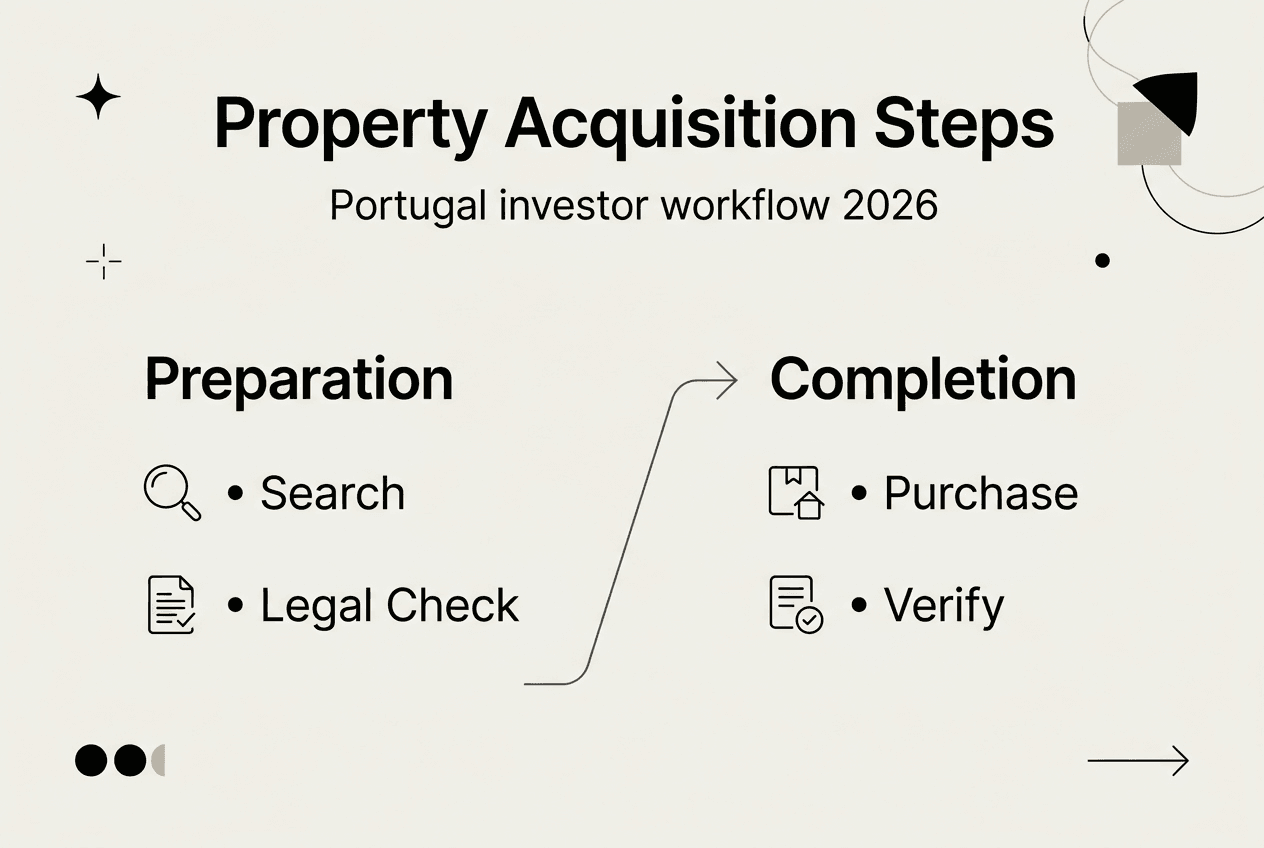
The Portuguese property acquisition workflow follows a structured sequence. Each step builds on the previous one, creating a clear path from initial offer to final ownership registration.
-
Define investment criteria and location preferences. Identify specific Algarve municipalities that match your rental strategy. Lagos offers strong vacation rental demand with year-round appeal. Portimão provides employment-driven tenant pools. Faro combines university students with business travelers.
-
Engage qualified legal counsel immediately. Your lawyer conducts due diligence on property titles, verifies zoning compliance, and checks for outstanding debts or liens. This legal assistance for property buyers protects you from hidden complications that surface after purchase.
-
Make a formal offer and sign the promissory contract. Once you identify a suitable property, submit a written offer. If accepted, you’ll sign a promissory purchase contract (Contrato de Promessa de Compra e Venda) and pay a deposit typically ranging from 10% to 30% of the purchase price. This contract legally binds both parties to complete the transaction.
-
Complete formal checks and pay acquisition costs. Your lawyer verifies all documentation while you arrange financing if needed. Acquisition costs typically total 6-10% of the purchase price. These expenses include Municipal Property Transfer Tax (IMT), stamp duty, notary fees, and registration charges.
-
Finalize the deed at the notary office. Both parties meet at the notary to sign the final deed (Escritura). You pay the remaining purchase price, and the notary registers the property transfer. This official registration establishes your legal ownership.
-
Register property and obtain fiscal number. Ensure the property registration at the Land Registry (Conservatória do Registo Predial) reflects your ownership correctly. Obtain a Portuguese tax identification number (NIF) if you don’t already have one.
The table below summarizes typical acquisition costs:
| Cost Component | Percentage/Amount | Notes |
|---|---|---|
| IMT (Property Transfer Tax) | 0-6% of purchase price | Rate depends on property value and type |
| Stamp Duty | 0.8% of purchase price | Applied to property transactions |
| Notary Fees | €500-€800 | Fixed fees for deed preparation and signing |
| Registration Fees | €200-€300 | Land registry recording charges |
| Legal Fees | 1-2% of purchase price | Lawyer costs for due diligence and representation |
Pro Tip: Request your lawyer to verify that the property’s urban license (licença de utilização) permits your intended use. A residential license may not automatically allow short-term vacation rentals, requiring additional municipal approval before you can operate legally.
Common pitfalls include rushing due diligence to meet seller timelines and underestimating total acquisition costs. Budget conservatively and maintain a cash reserve for unexpected expenses. Properties requiring renovation often reveal additional issues during inspection, so factor contingency funds into your financial planning.

Maximizing rental income: licensing, yields, and managing expenses
Securing proper licensing represents your first priority after purchase completion. Portugal requires short-term rental properties to obtain an AL (Alojamento Local) license from the local municipality. Operating without this license exposes you to fines and forces you to remove listings from booking platforms. The application process typically takes 30-60 days and requires proof of property ownership, compliance with safety standards, and payment of registration fees.
Rental yield expectations vary significantly across Algarve locations. The average gross rental yield for apartments is around 4.7%, but this figure masks important regional differences. Premium coastal areas like Albufeira generate strong summer income but face low winter occupancy. Year-round towns with employment centers, universities, or business districts maintain steadier demand throughout the calendar.
Net yields tell a more realistic story. After deducting expenses, most Algarve investors realize returns between 2.8% and 3.3%. Property management and vacancy are the biggest expenses reducing gross yield. Professional management typically costs 15-25% of rental income but delivers higher occupancy through optimized pricing, guest communication, and property maintenance.
Key expense categories affecting your net income include:
- Property management fees (15-25% of rental income)
- Municipal property tax (IMI, typically 0.3-0.8% annually)
- Condominium fees for apartment buildings (€30-€150 monthly)
- Utilities and internet (€80-€150 monthly)
- Cleaning and linen services (€40-€80 per turnover)
- Maintenance and repairs (budget 1-2% of property value annually)
- Income tax on rental earnings (14.5-48% depending on structure)
- Insurance coverage (€300-€600 annually)
The comparison below contrasts yield profiles between coastal hotspots and employment towns:
| Factor | Coastal Hotspot (e.g., Albufeira) | Year-Round Town (e.g., Faro) |
|---|---|---|
| Gross Rental Yield | 5.2% | 4.3% |
| Occupancy Rate | 65% (seasonal peaks) | 78% (consistent demand) |
| Net Yield After Expenses | 2.6% | 3.1% |
| Vacancy Risk | High in winter months | Low year-round |
| Property Management Cost | 20-25% of income | 15-20% of income |
| Capital Appreciation Potential | Higher long-term | Moderate steady growth |
Pro Tip: Choose property management in Lagos that offers dynamic pricing algorithms and multi-platform distribution. Quality managers increase your occupancy by 15-20% compared to self-management, more than offsetting their fees through higher total income.
Formal rental agreements Algarve Portugal protect both you and your tenants. These contracts clarify payment terms, maintenance responsibilities, and dispute resolution procedures. For long-term rentals, Portuguese law heavily favors tenants, making thorough tenant screening and detailed contracts essential.
Post-acquisition verification and best practices for long-term success
Ownership verification ensures your property registration reflects accurate details. Request an updated property certificate (Certidão Predial) from the Land Registry within 30 days of purchase completion. This document confirms your legal title, property boundaries, and any registered encumbrances. Discrepancies discovered early allow quick corrections before they complicate future transactions.
Maintaining legal compliance requires ongoing attention. Your AL license needs renewal according to municipal schedules, typically every five years. Tax obligations include annual IMI property tax payments and quarterly or annual income tax declarations on rental earnings. The Portuguese tax authority (Autoridade Tributária e Aduaneira) expects timely filings, and penalties for late submissions can be substantial.
Formal rental agreements reduce default risks and establish clear expectations. Whether you rent short-term to vacationers or long-term to residents, written contracts protect your interests. Include provisions covering payment schedules, security deposits, maintenance responsibilities, and termination conditions. Portuguese rental law favors tenant protections, so thorough documentation becomes your primary defense in disputes.
Monitoring local market trends helps you optimize rental pricing and property improvements. Track average daily rates in your area, seasonal demand patterns, and competitor amenities. Small upgrades like air conditioning, updated kitchens, or improved WiFi can justify premium rates and boost your occupancy. Review your property’s performance quarterly and adjust strategies based on actual results.
Pro Tip: Appointing a lawyer is highly recommended for ongoing advice on tax changes, regulatory updates, and investment strategy adjustments. Portuguese property law evolves regularly, and professional guidance helps you stay compliant while maximizing returns.
Best practices for long-term success include:
- Schedule annual property inspections to identify maintenance needs early
- Build relationships with reliable local contractors for repairs and upgrades
- Maintain separate accounts for rental income and property expenses
- Review insurance coverage annually to ensure adequate protection
- Track all expenses meticulously for tax deductions and financial analysis
- Stay informed about municipal regulation changes affecting rental properties
- Consider joining local property owner associations for market insights
Understanding rental income taxation Portugal guide prevents costly surprises during tax season. Portugal offers different tax regimes for rental income, and choosing the optimal structure depends on your total earnings, residency status, and long-term investment plans. Professional tax advice tailored to your situation typically saves more than it costs.
Invest in Algarve with expert support from Riva Prime
Navigating Portuguese property acquisition and rental operations becomes significantly easier with local expertise. Riva Prime specializes in helping international investors identify high-yield opportunities, complete purchases smoothly, and maximize rental profitability in Lagos and the wider Algarve region.
Our team guides you through every step to invest Algarve real estate, from initial property selection to ongoing management. We handle licensing applications, coordinate with legal professionals, and ensure your investment complies with all Portuguese regulations.

Professional property management Lagos Portugal services remove the operational burden of remote ownership. Our local presence means faster response times for maintenance issues, better guest communication, and optimized pricing strategies that increase your annual income. Discover how experienced property managers boost rental income through proven systems and market knowledge that self-management cannot match.
Frequently asked questions
What are the main acquisition costs when buying property in Portugal?
Acquisition costs typically total 6-10% of the purchase price. These expenses include Municipal Property Transfer Tax (IMT) ranging from 0-6%, stamp duty at 0.8%, notary fees of €500-€800, registration fees of €200-€300, and legal fees representing 1-2% of the purchase price. Budget these costs separately from your property purchase price to avoid financial surprises.
Do foreign buyers face restrictions purchasing property in Portugal?
Foreign investors face no ownership restrictions in Portugal. You can buy, renovate, rent, or sell property with identical rights to Portuguese citizens. This legal openness facilitates smooth market entry for international buyers targeting the Algarve region. However, you must still comply with local zoning regulations and obtain proper licenses for rental operations.
What rental yields can investors expect in the Algarve?
The average gross rental yield for apartments is around 4.7% across the Algarve. Net yields after expenses typically range from 2.8% to 3.3%. Year-round employment towns generally deliver higher net returns than premium coastal properties due to more consistent occupancy and lower seasonal vacancy risks. Location selection significantly impacts your actual returns, making market research essential before purchase. Explore opportunities to invest Algarve holiday home yields that match your investment criteria.
How long does the property acquisition process take in Portugal?
The typical acquisition timeline spans 60-90 days from initial offer to final ownership registration. This period includes due diligence (2-3 weeks), promissory contract signing and deposit payment (1 week), formal checks and financing arrangements (3-4 weeks), notary deed signing (1-2 weeks), and final property registration (1-2 weeks). Complex transactions involving financing, renovations, or title issues may extend this timeline. Working with experienced legal counsel accelerates the process by identifying and resolving issues proactively.
What ongoing obligations do property owners face in Portugal?
Property owners must pay annual IMI property tax (0.3-0.8% of fiscal value), file income tax returns on rental earnings, maintain valid AL licenses for short-term rentals, and comply with condominium rules for apartment buildings. You’re also responsible for property insurance, utility payments, and regular maintenance. Portuguese law requires owners to keep properties in good condition and address tenant complaints promptly. Failing to meet these obligations can result in fines, license revocation, or legal disputes that damage your investment returns.