
Securing a steady income stream while building future wealth can seem challenging, especially for those considering rental property in the beautiful Algarve region of Portugal. For many European investors looking beyond short-term speculation, focusing on long-term property investment is an effective path toward financial stability and capital growth. This article explores how extended holding periods, diversified asset selection, and expert local guidance can help remote investors navigate Portugal’s opportunities for sustainable income and long-term wealth.
Table des matières
- Defining Long-Term Property Investment
- Types of Long-Term Property Investments
- How Long-Term Investments Build Wealth
- Legal and Tax Rules in Portugal
- Risks, Costs, and Remote Ownership Challenges
Principaux enseignements
| Point | Détails |
|---|---|
| Long-Term Focus | Long-term property investment emphasizes sustained income and capital appreciation, requiring strategic asset selection and patience. |
| Diverse Property Types | Investors can choose from various property types, including residential, commercial, and industrial, each presenting unique risks and potential returns. |
| Wealth Building Mechanisms | Income generation, capital appreciation, and tax advantages are pivotal in leveraging long-term property investments for wealth creation. |
| Navigating Legal and Tax Considerations | Understanding the legal and tax landscape in regions like Portugal is crucial for foreign investors to optimize their investment strategies. |
Defining Long-Term Property Investment
Long-term property investment represents a strategic financial approach focused on acquiring real estate assets with the intention of generating sustained income and capital appreciation over extended periods. Unlike short-term speculation, this investment strategy prioritizes stable income streams and systematic wealth accumulation through carefully selected real estate opportunities.
From an institutional perspective, long-term investment strategies typically involve holding periods extending beyond traditional market cycles, often ranging from 5-20 years. These investments are characterized by several key attributes:
- Consistent income generation through rental yields
- Potential for substantial capital appreciation
- Lower transaction costs compared to frequent property trading
- Portfolio diversification benefits
- Hedge against inflation
The academic research further validates the complexity of long-term property investments by highlighting distinct characteristics across different real estate sectors. Historical return analyses demonstrate that residential, commercial, and agricultural properties exhibit unique income yield patterns and real income growth rates.
Key Investment Horizons
- Short-term: 1-3 years
- Medium-term: 3-5 years
- Long-term: 5-20 years
Successful long-term property investment requires comprehensive market understanding, strategic asset selection, and patience. Investors must evaluate macroeconomic trends, local market dynamics, property quality, and potential for sustained value appreciation.
Conseil de pro : Conduct thorough due diligence and consider consulting local real estate experts who understand regional market nuances before committing to any long-term property investment strategy.
Types of Long-Term Property Investments
Long-term property investments encompass a diverse range of real estate asset classes, each offering unique characteristics, risk profiles, and potential returns. Property investment categories typically include residential, commercial, industrial, and land holdings, providing investors with multiple strategic opportunities for wealth accumulation.
The primary types of long-term property investments include:
- Residential Real Estate
- Single-family homes
- Multi-unit apartment complexes
- Condominiums
- Townhouses
- Immobilier commercial
- Office buildings
- Retail spaces
- Mixed-use developments
- Industrial Real Estate
- Warehouses
- Manufacturing facilities
- Distribution centers
- Specialized Property Types
- Agricultural land
- Healthcare facilities
- Student housing
Historical return analyses reveal that each property type demonstrates distinct performance characteristics. Residential properties often provide more stable income streams, while commercial and industrial real estate can offer higher potential returns with corresponding increased risk levels.
Different property types respond uniquely to economic cycles, making diversification across asset classes crucial for long-term investment stability.
Each investment category requires specific due diligence and understanding of local market dynamics. Residential properties might offer more consistent rental demand, whereas commercial properties can provide longer lease terms and potentially higher rental yields.

Here’s a comparison of the main long-term property investment types in terms of risk, liquidity, and management effort:
| Type de propriété | Risk Level | Liquidity | Management Effort |
|---|---|---|---|
| Residential | Moderate risk | Relatively high | Modéré |
| Commercial | Higher risk | Variable | Haut |
| Industrial | Moderate to high | Lower | Modéré |
| Specialized (Land, Healthcare) | Varies widely | Faible | Specialized |
Investment Considerations by Property Type
- Residential: Lower entry costs, consistent demand
- Commercial: Higher potential returns, more complex management
- Industrial: Growing sector with e-commerce expansion
- Land: Potential for significant appreciation
Conseil de pro : Conduct comprehensive market research and consider consulting specialized real estate professionals who can provide insights into specific property type performance and local market trends.
How Long-Term Investments Build Wealth
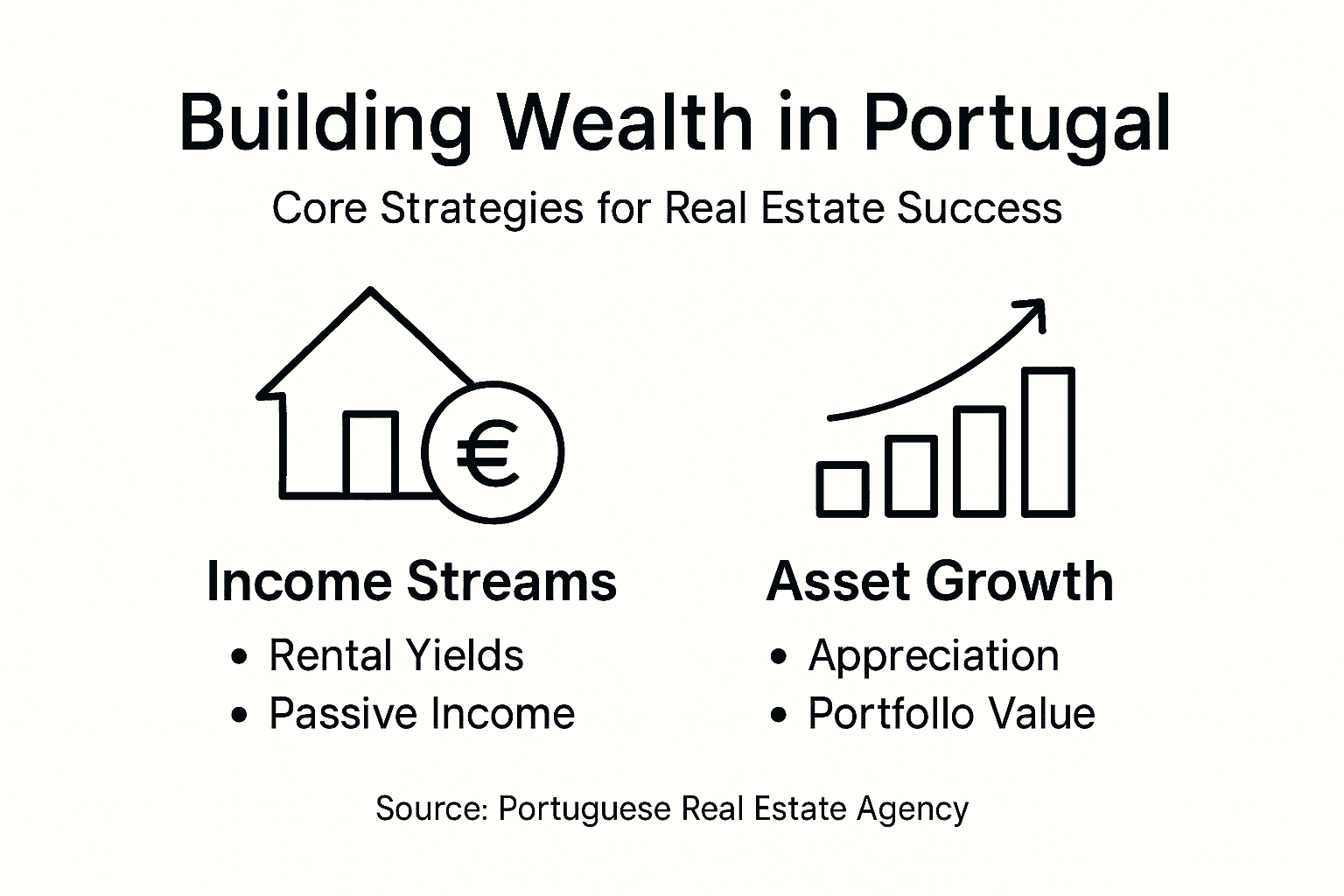
Wealth building through long-term property investments is a sophisticated strategy that leverages multiple financial mechanisms to generate sustainable income and capital appreciation. Portfolio construction techniques demonstrate how strategic asset allocation and patient investment approaches can transform real estate holdings into powerful wealth generation tools.
The fundamental wealth-building mechanisms of long-term property investments include:
- Consistent Rental Income
- Regular monthly cash flows
- Potential for periodic rent increases
- Passive income generation
- Capital Appreciation
- Property value increases over time
- Market value growth beyond initial investment
- Equity accumulation
- Tax Advantages
- Depreciation deductions
- Mortgage interest write-offs
- Potential 1031 exchange benefits
Systematic investing strategies emphasize the critical importance of starting early and maintaining disciplined investment approaches. Successful wealth building requires understanding compound interest principles and developing a long-term perspective that transcends short-term market fluctuations.
Wealth accumulation through property investments is not about timing the market, but about time in the market.
Investors can amplify their wealth-building potential through several strategic approaches:
- Reinvest rental income into property improvements
- Leverage property appreciation for additional investments
- Maintain properties to preserve and enhance value
- Diversify across different property types and locations
Key Wealth Multiplication Factors
- Consistent investment
- Strategic property selection
- Long-term holding periods
- Active portfolio management
Conseil de pro : Create a comprehensive investment strategy that balances immediate income generation with long-term appreciation potential, and regularly review your portfolio to ensure alignment with your financial goals.
Legal and Tax Rules in Portugal
Navigating the legal and tax landscape for property investments in Portugal requires a comprehensive understanding of the country’s unique regulatory environment. Tax rules for foreign investors present both opportunities and complexities that demand careful consideration and strategic planning.
Key legal and tax considerations for property investors include:
- Property Acquisition Taxes
- Taxe sur les transferts de propriété (IMT)
- Droit de timbre
- Notary and registration fees
- Ongoing Property Taxation
- Impôt foncier communal (IMI)
- Annual property ownership taxes
- Potential local municipal charges
- Income and Capital Gains Taxation
- Rental income tax rates
- Capital gains tax calculations
- Tax reporting requirements
Non-Habitual Resident (NHR) tax program offers significant tax advantages for foreign investors, providing potential reduced tax rates and exemptions on certain types of income. This program can substantially impact the overall financial strategy for property investments.
Foreign investors must obtain a Portuguese tax number (NIF) and understand the specific tax obligations associated with property ownership and income generation.
Investors should be aware of critical legal requirements:
- Obtain a Portuguese fiscal number (NIF)
- Open a Portuguese bank account
- Register property with local municipal authorities
- Comply with annual tax reporting obligations
Critical Documentation Requirements
This table summarizes key legal and tax documentation requirements for investors in Portugal:
| Document Type | Purpose | Who Needs It |
|---|---|---|
| Portuguese tax number (NIF) | Required for all transactions | All property investors |
| Proof of address | Verify identity | Foreign buyers |
| Bank account documents | Enable property payments | Owners and buyers |
| Purchase contract | Confirm legal ownership | Property purchasers |
- Valid passport
- Proof of address
- Portuguese tax identification number
- Property purchase documentation
Conseil de pro : Consult with a local tax professional who specializes in Portuguese real estate investments to ensure full compliance and optimize your tax strategy.
Risks, Costs, and Remote Ownership Challenges
Investing in Portuguese real estate as a remote investor presents a complex landscape of potential risks and financial considerations. Property market prospects reveal significant structural challenges that demand careful strategic planning and comprehensive risk management.
Key risks and cost factors for remote property ownership include:
- Financial Risks
- Fluctuating property market values
- Currency exchange rate volatility
- Unexpected maintenance expenses
- Operational Challenges
- Property management complexities
- Distance-related communication barriers
- Legal compliance requirements
- Market-Specific Risks
- Regional economic instability
- Changing rental market dynamics
- Bureaucratic processing delays
Comparative ownership analysis highlights the nuanced financial considerations remote investors must navigate, including upfront costs, ongoing fees, and potential market fluctuations that can significantly impact investment returns.
Remote property ownership requires a proactive approach, robust local support network, and comprehensive understanding of regional market dynamics.
Critical strategies for mitigating remote ownership risks include:
- Establish reliable local property management
- Create comprehensive contingency funds
- Develop strong communication channels
- Conduct regular property condition assessments
- Understand local legal and tax regulations
Estimated Cost Breakdown for Remote Investors
- Initial property acquisition costs: 7-12% of property value
- Annual maintenance expenses: 1-3% of property value
- Property management fees: 8-15% of rental income
- Legal and tax consultation: Variable
Conseil de pro : Build a trusted local network of real estate professionals, legal advisors, and property managers to provide comprehensive support and minimize potential investment risks.
Secure Profitable Long-Term Property Investments in Portugal with Riva Prime
Navigating the complexities of long-term property investment in Portugal can feel overwhelming, especially when managing risks like legal compliance, tax regulations, and remote ownership challenges. The article highlights key concerns including understanding Portuguese tax rules, overcoming operational hurdles, and selecting the right property types to maximize rental income and capital appreciation. If you want to confidently invest in Lagos, Algarve while overcoming these challenges, Riva Prime offers tailored solutions designed for international clients seeking hassle-free remote property investment and management.

Partner with Riva Prime to access expert property research, comprehensive legal and financial assistance, and trusted rental management services — all aimed at maximizing your long-term returns. Don’t let distance or market complexity hold you back from securing your ideal investment property. Start your journey now by exploring our investment services and discover how Riva Prime’s local expertise and personalized support can help you build lasting wealth through property in Portugal. Visit Riva Prime today and take confident steps toward your long-term real estate success.
Questions fréquemment posées
What are the key benefits of long-term property investment?
Long-term property investment offers consistent rental income, potential for capital appreciation, lower transaction costs compared to frequent trading, portfolio diversification, and serves as a hedge against inflation.
How do I determine the right property type for long-term investment?
Choosing the right property type depends on your investment goals, risk tolerance, and market conditions. Residential properties generally provide stable income, while commercial and industrial properties can offer higher returns with increased risk.
What are the common risks associated with long-term property investments?
Key risks include fluctuating property values, unexpected maintenance expenses, distance-related operational challenges for remote investors, and regional economic instability that might affect rental demand.
How can foreign investors optimize their tax strategy for property investments?
Foreign investors can optimize their tax strategy by taking advantage of programs like the Non-Habitual Resident (NHR) tax program, understanding property acquisition taxes, and obtaining a Portuguese tax number (NIF) to ensure compliance with local tax obligations.
Recommandé
- Liste de contrôle en 7 points de l'investissement immobilier portugais pour les acheteurs de l'UE - RIVA PRIME CONSULTING
- Ce que vous pouvez réellement gagner avec une propriété à Lagos, au Portugal.
- Investissement immobilier pas à pas au Portugal : Sécuriser les locations rentables - RIVA PRIME CONSULTING
- Pourquoi acheter pour louer en Algarve : Les avantages de la location - RIVA PRIME CONSULTING
- Agents immobiliers San Pedro, Marbella, Benahavis & Estepona - Marbellapads.com | Marbellapads