
Buying property in Portugal’s Algarve sounds straightforward until you realize the legal complexities that can derail your investment. Many international buyers underestimate how critical thorough due diligence is in the Portuguese market, assuming their home country processes apply equally here. This guide walks you through exactly what due diligence means in the Algarve context, the specific checks required at each purchase stage, common pitfalls to avoid, and how to apply these principles when evaluating holiday homes or rental investments. You’ll learn the step-by-step verification process that protects your capital and ensures a legally secure transaction.
Spis treści
- Understanding Due Diligence In Algarve Real Estate
- Key Stages And Checks During Due Diligence In Portugal
- Common Pitfalls And How To Avoid Them In Algarve Due Diligence
- Applying Due Diligence: Evaluating Algarve Holiday Homes And Rental Investments
- Explore Algarve Real Estate Investment Opportunities With Riva Prime
- Najczęściej zadawane pytania
Kluczowe wnioski
| Punkt | Szczegóły |
|---|---|
| Legal verification is essential | Due diligence confirms property ownership, debts, and compliance with Portuguese regulations before purchase. |
| Multi-stage process | The buying journey involves reservation, promissory contract, and final deed, each requiring specific checks. |
| Lawyer involvement recommended | Prawnicy specjalizujący się w prawie nieruchomości w Portugalii navigate local bureaucracy and prevent costly mistakes. |
| Rental-specific considerations | Holiday home investors must verify licensing, zoning, and occupancy regulations for short-term rentals. |
| Prevention saves money | Proper due diligence avoids hidden debts, legal disputes, and compliance issues that can cost thousands. |
Understanding due diligence in Algarve real estate
Due diligence is the comprehensive research and verification process you complete before finalizing a property purchase. In the Algarve market, this means investigating property ownership status, checking for outstanding debts or liens, confirming compliance with local zoning laws, and verifying the physical condition matches what sellers claim. Foreign buyers often skip critical steps because they don’t understand Portuguese legal requirements or assume their agent handles everything.
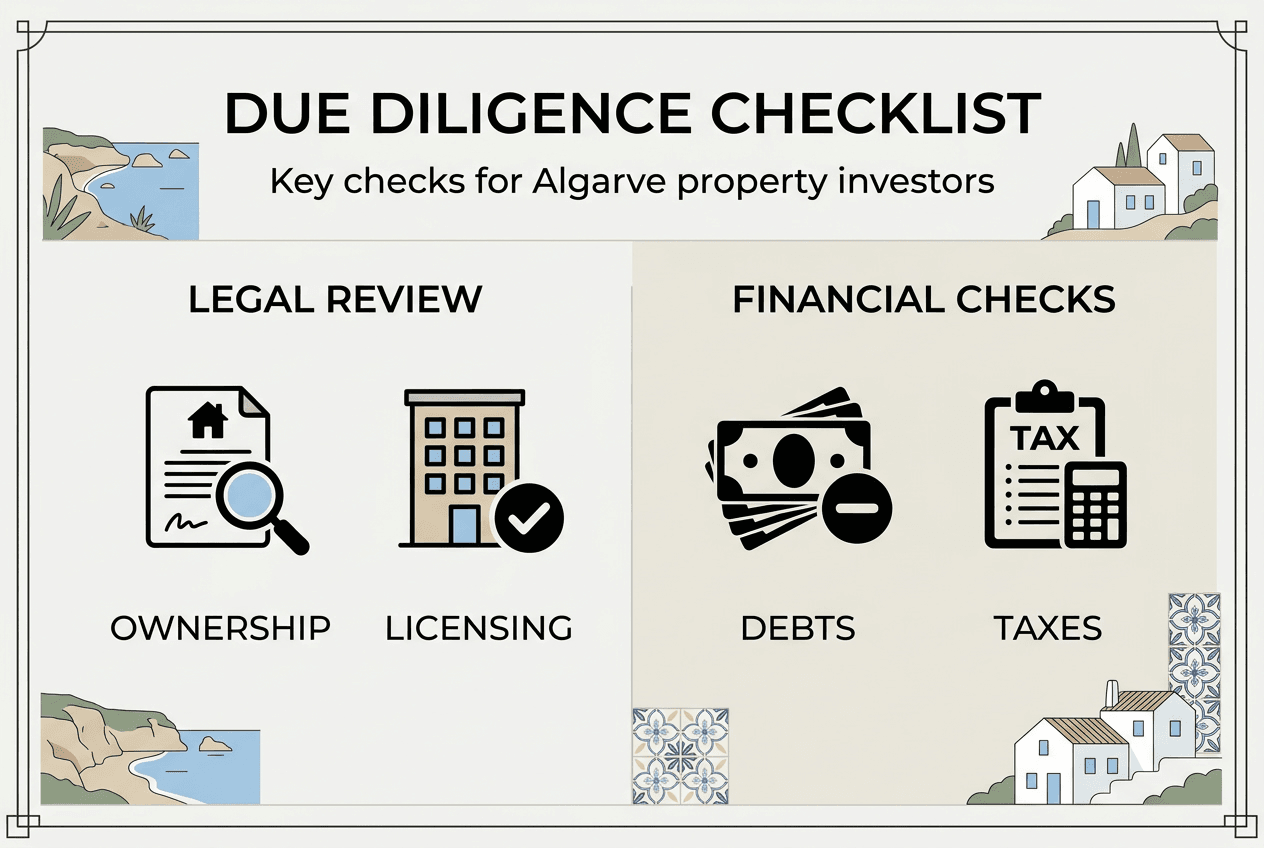
Key inquiries during due diligence include confirming the seller actually owns the property free and clear, checking the land registry for encumbrances, verifying tax payments are current, and ensuring any renovations or additions received proper permits. You need to confirm the property’s legal description matches its physical boundaries and that zoning allows your intended use, whether personal residence or rental investment. These checks prevent situations where you discover unpaid debts attached to the property or find out your holiday home can’t legally operate as a short-term rental.
The importance of verifying legal status cannot be overstated. Portuguese property law operates differently than common law systems, with different ownership structures, inheritance rules, and creditor protections. A property might appear clean but carry hidden liabilities from previous owners or co-owners you didn’t know existed. Physical condition checks through professional surveys reveal structural issues, illegal construction, or maintenance problems that affect value and future costs.
Using a Portuguese real estate lawyer is highly advisable to avoid common traps. Lawyers conduct title searches, review contracts, verify permits, and ensure all documentation is legitimate and complete. They understand local bureaucracy and can spot red flags foreign buyers miss.
Common traps include:
- Purchasing properties with undisclosed debts that transfer to new owners
- Buying land or buildings without proper construction licenses
- Failing to verify shared ownership or inheritance claims
- Overlooking zoning restrictions that prevent rental operations
- Missing tax liabilities that become your responsibility
“Foreign investors often discover too late that their Algarve property carries debts or legal issues that could have been identified through proper due diligence, turning a dream investment into a financial nightmare.”
Working with legal assistance professionals who specialize in international property transactions ensures you understand exactly what you’re buying and what obligations come with it. They translate complex Portuguese legal terms, explain your rights and responsibilities, and coordinate with notaries and government offices on your behalf.
Key stages and checks during due diligence in Portugal
Buying property typically involves a reservation agreement, a promissory contract with a 10-30% deposit, then a final deed and registration. Each phase requires specific due diligence activities to protect your interests and ensure the transaction proceeds smoothly.
-
Reservation agreement stage: You pay a small deposit to take the property off the market while conducting initial checks. During this period, verify the seller’s identity and ownership through land registry searches. Confirm the property’s fiscal number and check for any registered debts, mortgages, or liens. Request copies of the property deed, tax certificates, and recent utility bills. This stage typically lasts one to two weeks.
-
Promissory contract stage: After initial verification, you sign a binding contract and pay a substantial deposit. Before signing, complete comprehensive due diligence including detailed title searches, verification of planning permissions for existing structures, and confirmation that property taxes are current. Hire a surveyor to inspect the property’s physical condition, identify structural issues, and verify boundaries match legal descriptions. Check with the local municipality about any planned developments or zoning changes that might affect the property.
-
Pre-completion checks: Between promissory contract and final deed, ensure all conditions are met. Verify the seller has cleared any debts or mortgages, obtain updated land registry certificates showing clean title, and confirm all permits for renovations or additions are legitimate. If buying a rental property, verify existing rental licenses and check compliance with local tourism regulations.
-
Final deed and registration: At the notary’s office, review all documents one final time before signing. Ensure the deed accurately describes the property, all parties are properly identified, and the purchase price and payment terms are correct. After signing, the deed must be registered with the land registry to complete the ownership transfer.
Pro Tip: If you’re investing in short-term rental properties, verify the property holds valid AL licensing during the promissory contract stage. Many Algarve municipalities have tightened rental regulations, and operating without proper licenses can result in heavy fines or forced closure.
Potential delays often arise from incomplete documentation, undisclosed co-owners, or properties with irregular construction that needs legalization. Sellers sometimes don’t have all required permits for additions or renovations, which must be resolved before you can complete the purchase. Starting due diligence early and maintaining clear communication with your lawyer and the seller prevents most delays. Following the kroki do zakupu nieruchomości w Algarve systematically ensures nothing falls through the cracks.
Common pitfalls and how to avoid them in Algarve due diligence
Typical due diligence mistakes include ignoring legal debts attached to properties, skipping professional property inspections, and failing to verify current zoning regulations or planned changes. International buyers often rely too heavily on verbal assurances from sellers or agents without demanding documentary proof. Language barriers compound these issues when buyers don’t fully understand contracts or official documents.
The risk of hidden debts represents one of the most serious pitfalls. In Portugal, certain debts can transfer with the property regardless of who incurred them. Unpaid property taxes, homeowner association fees, or municipal charges can become your liability even if they originated with previous owners. Shared ownership situations create additional complexity, especially with inherited properties where multiple family members hold fractional interests. You might negotiate with one heir only to discover others have claims or veto rights over the sale.

Pro Tip: Always verify rental licenses for holiday homes in the Algarve before purchase. The region has implemented stricter AL licensing requirements, and many existing properties operate illegally. Buying an unlicensed rental property means you’ll face the time and expense of obtaining permits, which isn’t always guaranteed, or you won’t be able to operate as planned.
Common errors to avoid:
- Accepting seller representations without independent verification
- Failing to check for illegal construction or unpermitted additions
- Overlooking utility connection issues or easement rights
- Not investigating neighborhood developments that might affect property value
- Skipping environmental checks for flood zones or protected areas
- Trusting translation apps instead of professional legal translation
“The financial risks of skipping thorough due diligence can easily exceed the property’s purchase price when you factor in legal battles, forced demolitions of illegal structures, or debts that surface after closing.”
Using local experts and Portuguese real estate lawyers helps you navigate bureaucracy and language barriers effectively. These professionals understand which government offices to contact, what documents to request, and how to interpret official responses. They recognize warning signs in property histories and can advise whether issues are minor inconveniences or deal breakers.
Local lawyers also coordinate with notaries, tax authorities, and municipal offices to gather required documentation. They ensure contracts protect your interests and include appropriate contingencies if problems arise during the verification process. Their fees represent a small fraction of what you risk by proceeding without professional legal assistance, especially given the complexities of Portuguese property law and the potential for costly mistakes.
Applying due diligence: evaluating Algarve holiday homes and rental investments
Specific due diligence for rental properties includes assessing licensing requirements, occupancy regulations, and local tourism laws that govern short-term rentals in the Algarve. You must verify the property holds or can obtain AL licensing, check whether the municipality has imposed caps on new rental licenses, and confirm the property type and location allow tourist accommodation. Some Algarve areas have restricted new licenses to preserve residential character, making existing licensed properties more valuable.
When evaluating financial returns, investigate actual rental income from comparable properties, not just seller projections. Request documentation of historical occupancy rates, seasonal pricing variations, and operating expenses including management fees, utilities, maintenance, and local taxes. Factor in the costs of obtaining or maintaining rental licenses, meeting safety and quality standards, and complying with tax reporting requirements for rental income.
| Aspekt | Personal Use Purchase | Short-Term Rental Investment |
|---|---|---|
| Licensing requirements | None beyond standard ownership | AL license mandatory, municipality approval needed |
| Due diligence focus | Condition, location, amenities | Income potential, licensing status, competition analysis |
| Legal considerations | Standard property law | Tourism regulations, tax compliance, operational permits |
| Ongoing obligations | Property taxes, maintenance | Rental taxes, license renewals, safety inspections |
| Financial planning | Purchase price, renovation costs | ROI calculations, management fees, vacancy rates |
Checklist for rental investment due diligence:
- Verify current AL license status and expiration date
- Check municipal restrictions on new rental licenses
- Investigate local rental market saturation and competition
- Calculate realistic occupancy rates based on location and season
- Factor property management costs into return projections
- Confirm compliance with safety regulations and insurance requirements
- Understand tax obligations for rental income in Portugal
- Verify the property meets minimum quality standards for tourist accommodation
Pro Tip: Work with property managers who understand short-term rental licensing in the Algarve and can guide you through compliance requirements. Experienced managers know which properties will qualify for licenses, what improvements might be needed, and how to navigate the application process efficiently.
Importance of factoring in local taxes and licensing extends beyond initial compliance. Portugal taxes rental income, and you must register as a rental operator, file annual returns, and potentially collect tourist taxes on behalf of municipalities. Non-compliance can result in fines, license revocation, or legal action. Understanding these obligations upfront helps you calculate true net returns and avoid surprises that erode profitability.
Ocena holiday home investments in the Algarve requires balancing potential returns against regulatory complexity and market conditions. Properties in prime locations with existing licenses command premium prices but offer more certain income potential. Unlicensed properties might seem like bargains but carry risks if licensing proves difficult or impossible to obtain.
Explore Algarve real estate investment opportunities with Riva Prime
Navigating due diligence and property purchases in the Algarve becomes significantly easier with experienced local partners who understand both international investor needs and Portuguese legal requirements. Riva Prime supports international investors through every stage of the acquisition process, from initial property selection through final ownership transfer and beyond.

Our consulting services clarify the kroki do inwestowania w nieruchomości w Algarve and connect you with trusted legal professionals who conduct thorough due diligence on your behalf. We help you understand licensing requirements for rental properties, evaluate realistic return projections, and identify properties that match your investment criteria. Our legal assistance services coordinate with Portuguese lawyers to ensure all verifications are complete and your interests are protected throughout the transaction. Whether you’re purchasing a holiday home for personal use or building a rental portfolio, our Przewodnik zakupowy dla Algarve zapewnia lokalną wiedzę specjalistyczną, która przekształca złożone procesy w płynne, udane inwestycje.
Często zadawane pytania
Jakie dokumenty są niezbędne do zachowania należytej staranności przy zakupie nieruchomości w Algarve?
Niezbędne dokumenty obejmują akt własności nieruchomości przedstawiający historię własności, aktualne wpisy do rejestru gruntów potwierdzające brak obciążeń, zaświadczenia podatkowe potwierdzające bieżące płatności, pozwolenia na budowę lub remonty oraz zaświadczenia o rozliczeniu zadłużenia od gminy i stowarzyszeń właścicieli domów. Należy również uzyskać numer identyfikacji podatkowej nieruchomości, rachunki za media potwierdzające brak zaległości oraz świadectwo charakterystyki energetycznej wymagane przy sprzedaży wszystkich nieruchomości. Uzyskanie oficjalnej dokumentacji na wczesnym etapie usprawnia proces należytej staranności i zmniejsza liczbę niespodzianek na etapie zawierania umowy.
Jak długo trwa proces due diligence przy zakupie w Portugalii?
Typowe badanie due diligence mieści się w fazie od rezerwacji do ostatecznego aktu notarialnego, często trwając od jednego do trzech miesięcy, w zależności od złożoności nieruchomości i dostępności dokumentacji. Proste transakcje z dobrze udokumentowanymi nieruchomościami i zmotywowanymi sprzedającymi mogą zakończyć się szybciej, podczas gdy nieruchomości z wieloma właścicielami, niejasnymi granicami lub kwestiami związanymi z pozwoleniami trwają dłużej. Opóźnienia zwykle wynikają z brakujących dokumentów, zawiłości prawnych wymagających rozwiązania lub powolnych odpowiedzi z urzędów państwowych, które odpowiednie przygotowanie i doświadczony radca prawny mogą zminimalizować.
Czy mogę przeprowadzić due diligence bez portugalskiego prawnika?
Technicznie rzecz biorąc, można przeprowadzić badanie due diligence samodzielnie, ale takie podejście jest wysoce ryzykowne ze względu na bariery językowe, nieznane systemy prawne i złożone procedury biurokratyczne. Portugalscy prawnicy zajmujący się nieruchomościami zapewniają dokładną kontrolę i chronią przed typowymi pułapkami, które przegapiają zagraniczni nabywcy. Uzyskują oni dostęp do oficjalnych rejestrów, dokładnie interpretują dokumenty prawne, identyfikują potencjalne problemy i zapewniają, że umowy chronią Twoje interesy. Koszt usług prawnych jest minimalny w porównaniu do ryzyka finansowego wynikającego z niewykrytych problemów.
Jakie konkretne kontrole mają zastosowanie do nieruchomości przeznaczonych na wynajem krótkoterminowy?
Nieruchomości na wynajem wymagają weryfikacji statusu licencji AL, potwierdzenia, że lokalne zagospodarowanie przestrzenne zezwala na zakwaterowanie turystyczne oraz sprawdzenia ograniczeń miejskich lub limitów nowych licencji. Należy sprawdzić, czy nieruchomość spełnia minimalne standardy jakości i bezpieczeństwa dla wynajmu turystycznego, zweryfikować zgodność z przepisami przeciwpożarowymi i potwierdzić, że typ budynku kwalifikuje się do uzyskania licencji na wynajem. Ponadto należy sprawdzić, czy stowarzyszenia właścicieli domów zezwalają na wynajem krótkoterminowy, ponieważ niektóre z nich zabraniają lub ograniczają takie wykorzystanie niezależnie od licencji miejskich.